By Emma Nicolas
In our Rethinking the Farm Bill blog series, we bring our 2026 Farm Bill policy priorities to life with stories from farmers and ranchers across the country who are navigating a food system increasingly controlled by a handful of powerful corporations.
Many farmers are trapped in a system that keeps them dependent on costly synthetic fertilizers, pesticides, and bundled seed-and-chemical packages sold by a few corporate giants.
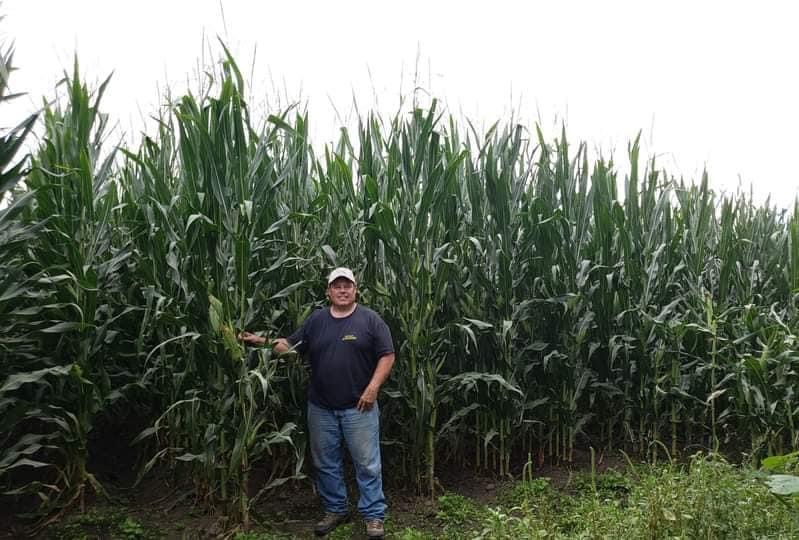
But Kevin Fulton found a way out. On his Nebraska farm, he moved away from chemicals and built a certified organic grain and grass-fed cattle operation.
“The best business decision I ever made was to leave the conventional farming sector,” Fulton told Farm Action.
Fulton’s story also shows why farmers need better support. Transitioning to organic, regenerative, and soil health-focused systems takes money, time, mentorship, and reliable public programs.
In the 2026 Farm Bill, Congress has a choice: help more farmers get off the chemical-input treadmill, or give even more power to the pesticide companies that profit from keeping them on it.
"A Different Direction"
It didn’t take long for Fulton to realize who was really in control of his operation.
“I was a chemically addicted farmer,” said Fulton.
Fulton had been on farms since he was a kid, but once he took over his family’s operation in the 1990s, he says he quickly became disillusioned with conventional farming practices and the power that chemical companies held over his income. He said that each year, he was just scraping by financially, with barely enough to farm the next season.
“At first I thought, well, that’s a real privilege—I can keep farming, but then after a while, I was like, this is punishment. I mean, I’m not getting ahead,” Fulton said. “So, I made the decision to start saving myself and went in a different direction.”
In 2002, Fulton said he abruptly stopped using all chemicals, synthetic fertilizers, and soil amendments on all 2,800 acres that he co-owned and managed with his family. He hasn’t used any herbicides or insecticides in 24 years.
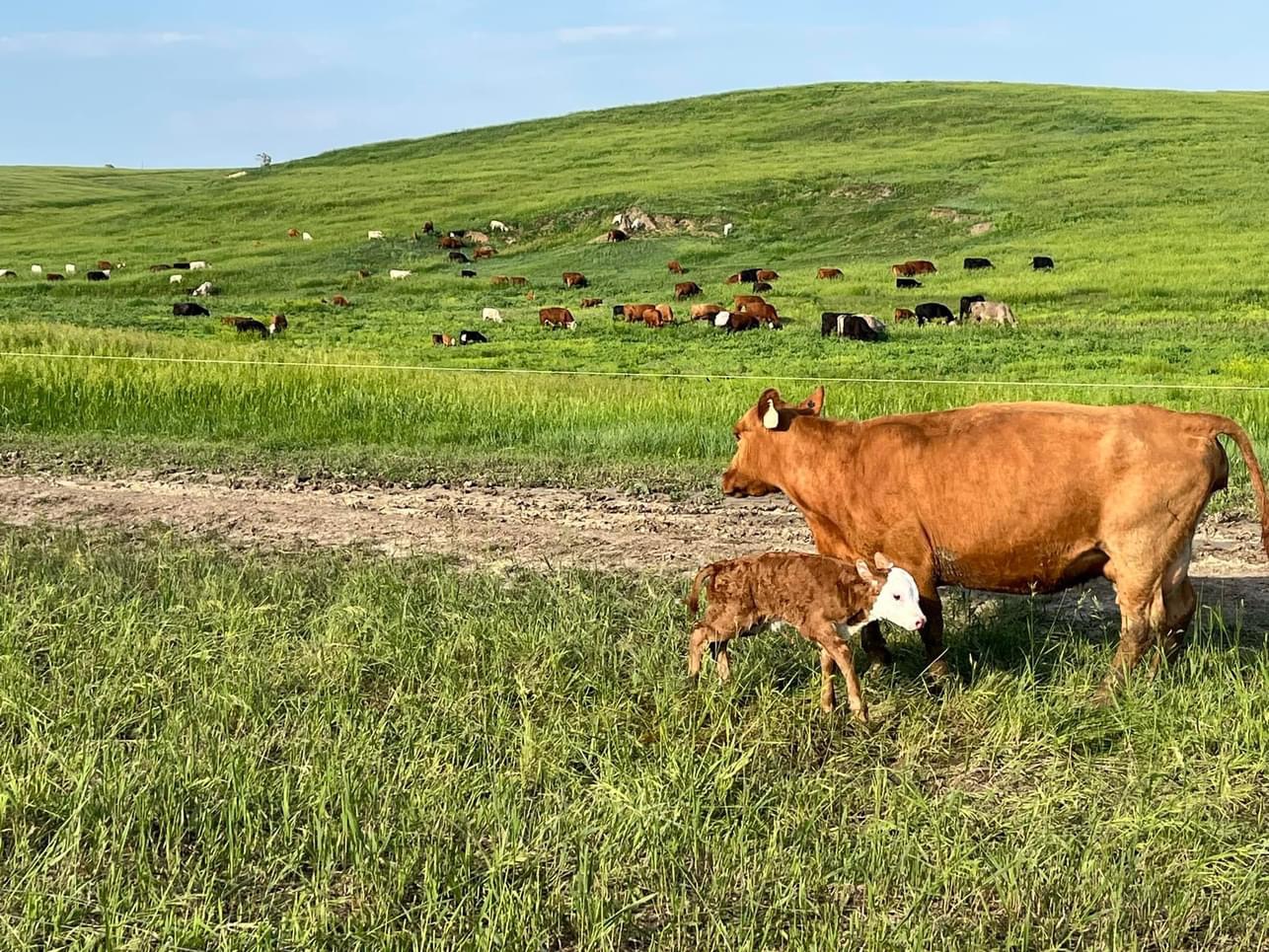
Cattle grazing on Kevin’s 2,800 acre organic and regenerative farm in Nebraska.
Fulton said initially the transition to organic was scary, as there’s a steep learning curve. But he was determined to make it work, and he’s never looked back.
Fulton said he usually makes about double what he’d make as a conventional farmer on his organic grains—especially given the money he saves on chemical and fertilizer expenses. He said the benefits go beyond his bottom line, reaching his animals, plants, soil, surrounding environment, and community. He uses less energy on the farm and has created a habitat for beneficial insects instead of killing them.
One of the biggest changes, he said, is a shift in mindset.
“You realize you’re managing an ecosystem, so you get up every day thinking, ‘What can I do to increase the symbiotic relationships of the plants and animals out there?” he said. “‘What can I do to make that ecosystem thrive on a higher level?’”
Fulton said he’s been told countless times over the years that he won’t make it as an organic farmer.
“I didn’t listen to any of the haters or any of the naysayers, and I proved them all wrong,” he said.
He says there’s a lot of misinformation, and people are stuck in their ways.
“There’s more management involved with regenerative and organic farming, and that’s okay, as long as you’re getting paid for that extra management, and if you’re doing it right, you should be,” he said.
Fulton said mentorship and government conservation programs helped him fully commit to transforming his land. However, those government programs are often inconsistent and underprioritized.
He explained that it can be hardest for small, independent farms to access those programs due to regulatory barriers and limited funding, but those are the farms that need the support the most. When these programs are accessible, Fulton says, even a small amount of support can motivate a farmer to make the switch to organic and regenerative agriculture.
How Congress Can Help
Fulton’s story shouldn’t be an outlier. The same conservation programs that helped him transition away from conventional practices can help other farmers, but only if Congress makes changes to ensure the largest farming operations don’t capture the bulk of this critical support. Congress has an opportunity to do just that in the 2026 Farm Bill by making these programs more accessible, consistent, and useful for the farmers who need them most.
Right now, federal farm policy stacks the deck in favor of the largest operations. They already receive the lion’s share of support through risk management and crop insurance programs. Increasingly, they are also capturing funding meant to help farmers adopt organic and regenerative practices, crowding out the smaller producers trying to make the transition.
One example is high-cost infrastructure projects like biodigesters, which process manure from large livestock operations and can absorb disproportionate amounts of conservation funding, leaving less available for producers seeking to transition out of conventional farming.
Including reforms like the Environmental Quality Incentives Program (EQIP) Improvement Act in the farm bill would help ensure conservation support reaches farmers who are implementing practices to reduce their dependence on chemical inputs. By strengthening access to this support, Congress could help more farmers follow the path Fulton took in shifting to organic and regenerative agriculture.
“Sometimes it’s kind of the nudge that some people need to maybe move in a different direction,” Fulton said of the government programs.
The Other Path: Protecting the Pesticide Companies
The farm bill could also move in the opposite direction.
Instead of helping farmers reduce their dependence on costly chemical inputs, Congress could give pesticide manufacturers new legal protections that make the current system even harder to challenge.
Facing mounting legal pressure, pesticide giant Bayer-Monsanto, the company behind Roundup, has been pushing for a federal liability shield that could make it harder for farmers, farmworkers, and others to hold pesticide companies accountable for harm caused by their products.
“That’s the most ridiculous thing I’ve ever heard in all my 60 years of farming,” Fulton said.
Bayer has been hit with a staggering number of lawsuits from people alleging Roundup caused their cancer. The company’s response has been to pressure lawmakers at both the federal and state levels to shield it from further lawsuits, which led to the passage of pesticide liability shield laws in Georgia, North Dakota, and Kentucky. Now, pesticide companies have their sights set on the farm bill.
The House version of the farm bill originally included a provision that would have protected pesticide companies from lawsuits, but that provision was stripped before the bill reached the floor. It’s not yet clear whether it will be added to the Senate version.
Fulton said farmers need to have a path to legal action if they are harmed. To him, a pesticide immunity shield would just be another way for giant corporations to flex their control over farmers already trapped in a system run by monopolies.
“It needs to be stopped,” Fulton said of the pesticide immunity shield.
Fulton’s story shows a way off the chemical-input treadmill. The question now is whether Congress will help more farmers take that path, or further entrench the power of the companies that profit from keeping farmers dependent.
Why This Moment Matters
Debate is now underway in the Senate after the House passed its version of the farm bill. The decisions Congress makes will help determine whether more farmers have a path toward lower-input, soil-building systems, or whether pesticide companies gain even more power over the farmers and communities already bearing the costs of chemical-intensive agriculture.
Learn more about our farm bill platform, or read our full Rethinking the Farm Bill blog series.