By Angela Huffman
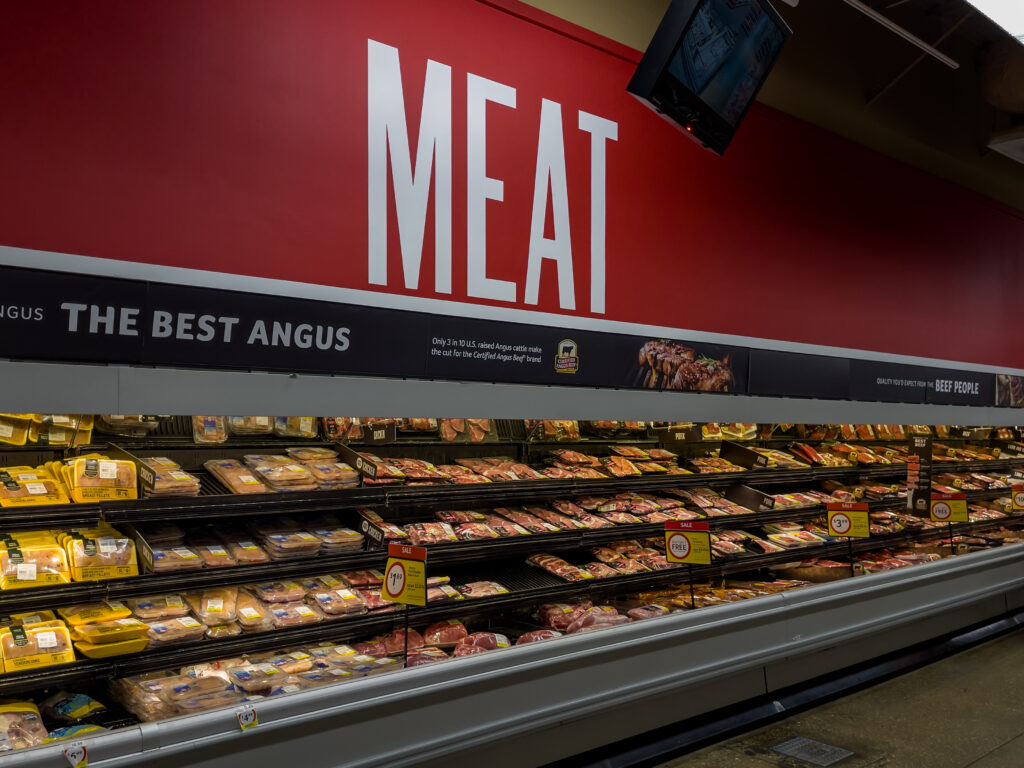
Many shoppers assume the beef they buy is clearly labeled. It isn’t.
Unlike most products in the grocery store, beef is often sold without telling shoppers where it came from. That means imported beef can be sold alongside beef raised by American ranchers without consumers knowing the difference.
Congress now has a chance to fix that. Senate Majority Leader John Thune is pushing to restore Mandatory Country-of-Origin Labeling by including the American Beef Labeling Act in the Farm Bill. The legislation would require beef labels to tell consumers where an animal was born, raised, and slaughtered.
One of the biggest opponents is the National Cattlemen’s Beef Association. That may come as a surprise. After all, NCBA says it represents America’s cattle producers. But last week, the organization made its position unmistakably clear, urging Congress to reject Mandatory Country-of-Origin Labeling (MCOOL) and calling it “failed policy.”
The post quickly drew criticism from ranchers on social media. NCBA disabled comments on the post, and users added a Community Note pointing out that R-CALF USA, the nation’s largest producer-only cattle organization, supports restoring MCOOL. The note challenged NCBA’s implication that it speaks for cattle producers on the issue.
The exchange highlights a question that has divided the cattle industry for years: Why is one of Washington’s most influential beef lobbying organizations fighting a policy that many independent ranchers have spent years trying to restore?
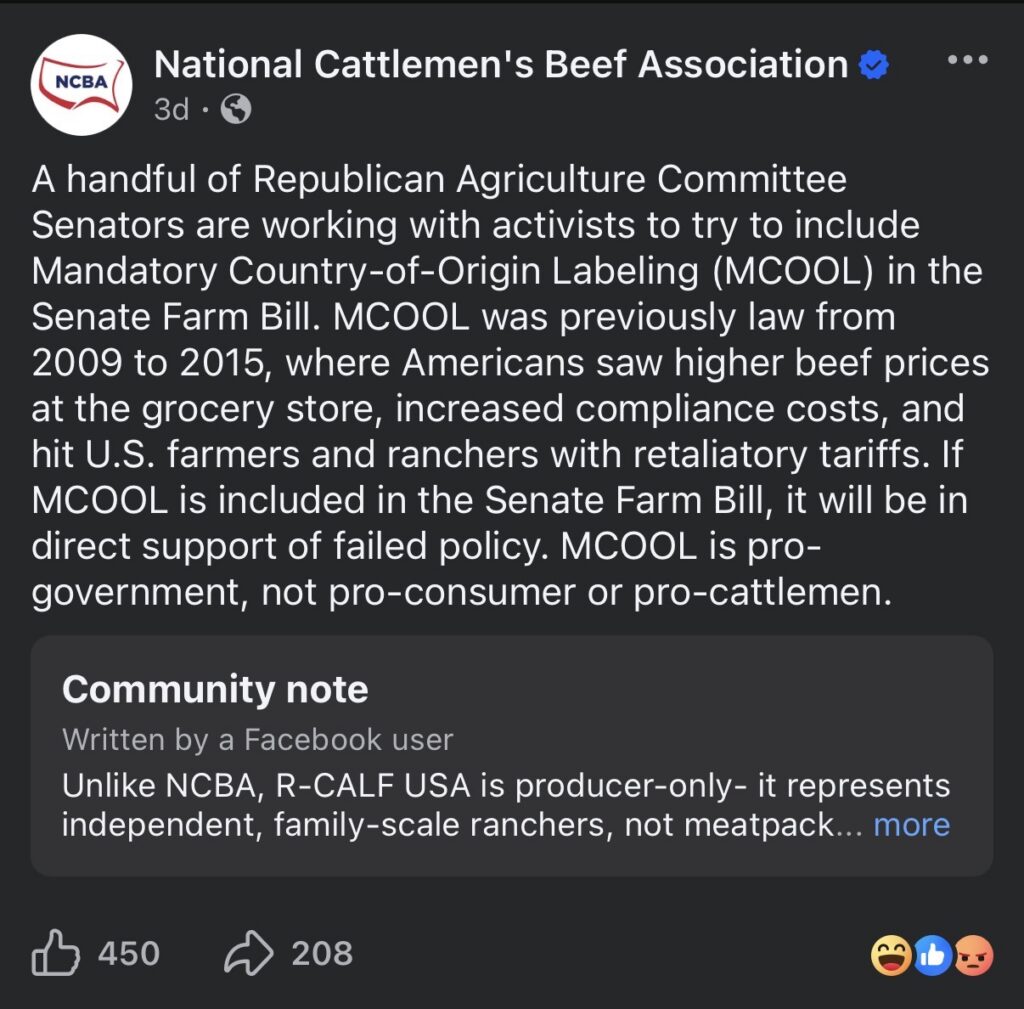
NCBA opposes restoring Mandatory Country-of-Origin Labeling.
Why Is NCBA Fighting Country-of-Origin Labels?
It’s easy to assume an organization called the National Cattlemen’s Beef Association speaks primarily for ranchers. The reality is more complicated. Many agricultural trade associations also represent large corporations whose interests don’t always align with the independent producers they claim to speak for.
While 3% of U.S. ranchers are NCBA members, the organization also includes some of the largest meatpacking companies in the world among its corporate members, including Tyson Foods, Cargill, and National Beef. Those companies have a very different business model than the average rancher. They buy cattle and beef from multiple countries and benefit when imported beef can be sold without identifying its country of origin.
U.S. ranchers have a different interest. They want consumers to know which beef was raised here. Country-of-origin labels give them a way to distinguish their product from imported beef.
That difference helps explain why the debate has become so contentious. While many ranchers have spent years urging Congress to restore MCOOL, NCBA is lobbying to keep it out of the Farm Bill.
The Checkoff Controversy
The debate over MCOOL isn’t happening in a vacuum. Every time cattle are sold in the United States, ranchers pay a mandatory one-dollar fee into the government’s beef checkoff program. Those dollars are intended to fund research, education, and beef promotion—not lobbying.
NCBA is the largest recipient of those funds. According to WhoIsNCBA.com, about 62% of NCBA’s revenue in 2024 came from beef checkoff contracts.
That relationship has been controversial for years. A 2010 independent audit found that NCBA improperly charged numerous expenses to the beef checkoff, including policy-related activities, legislative conference travel, spouse travel, and work related to MCOOL.
But the debate goes beyond improper spending. The checkoff helps fund much of NCBA’s operations, giving the organization the staff, infrastructure, and national presence to be one of the most influential voices in agricultural policy.
Because NCBA administers major beef checkoff contracts, lawmakers, federal agencies, and the media often treat the organization as the voice of America’s cattle producers.
At the same time, many ranchers object to being required by the government to help fund the organization lobbying against them on issues like MCOOL.
What's Next
Farm Action has already helped close the misleading Product of USA loophole and pushed USDA and the FTC to crack down on deceptive meat labeling. Those reforms made it harder for companies to mislead consumers with voluntary claims.
But they didn’t restore the one protection Congress eliminated in 2015. Today, beef can still be sold without telling shoppers where the animal was born, raised, and slaughtered. Congress has the chance to change that by restoring MCOOL in the Farm Bill.
Now it’s up to lawmakers to decide whether consumers deserve that information and whether American ranchers should be able to compete in a marketplace where their product can be clearly identified.