By Jessica Cusworth and Emma Nicolas
With analysis by Angela Huffman
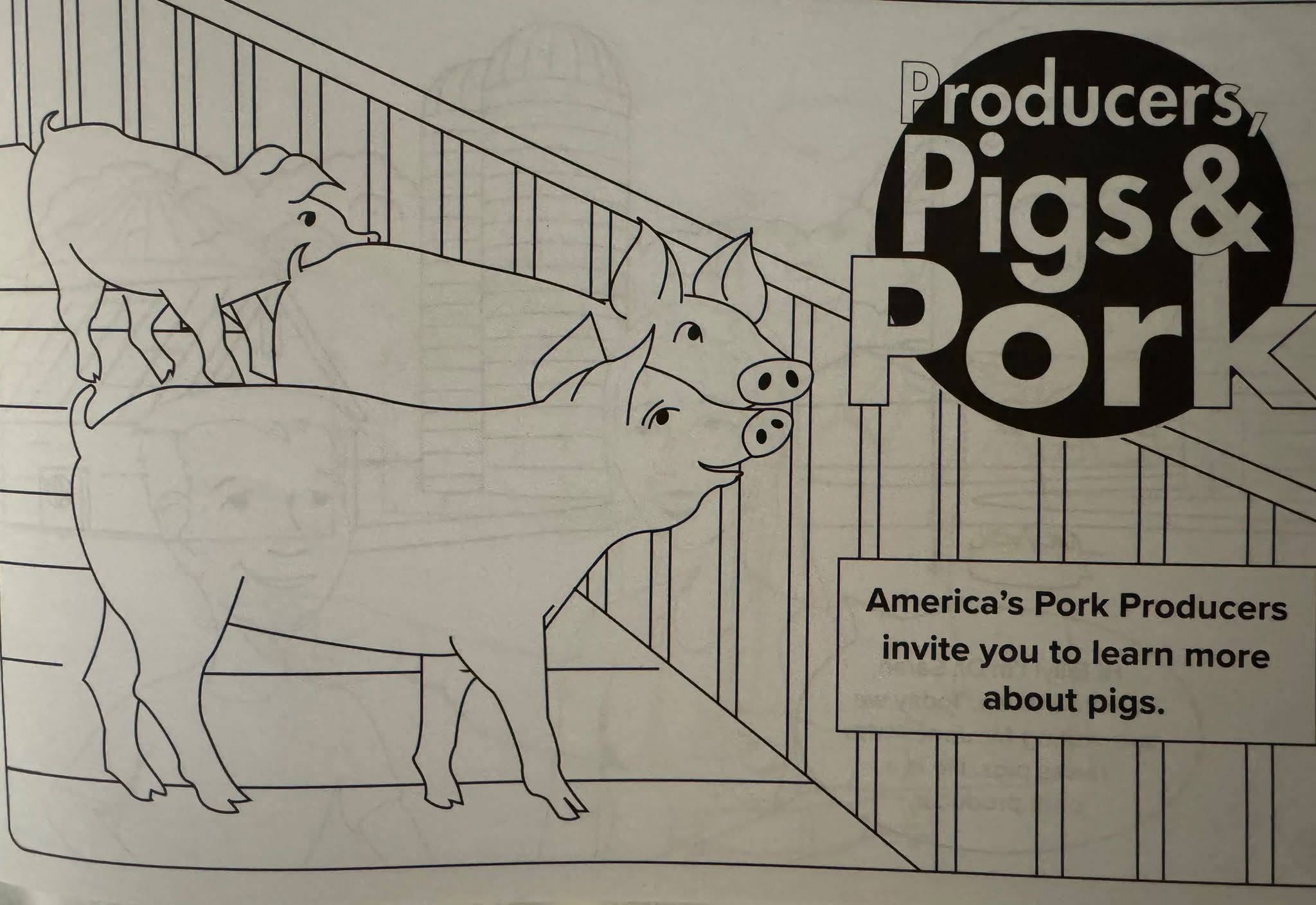
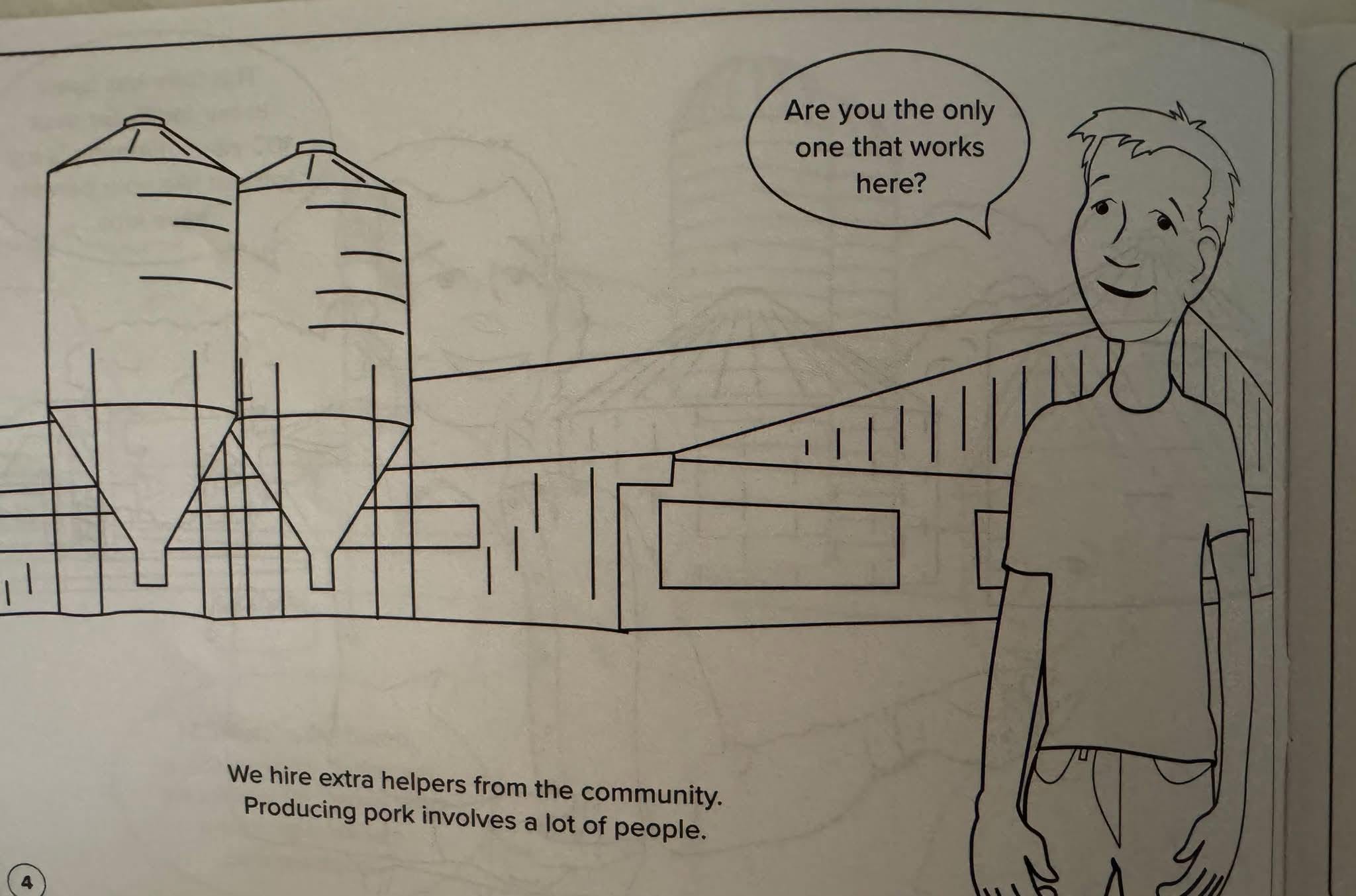
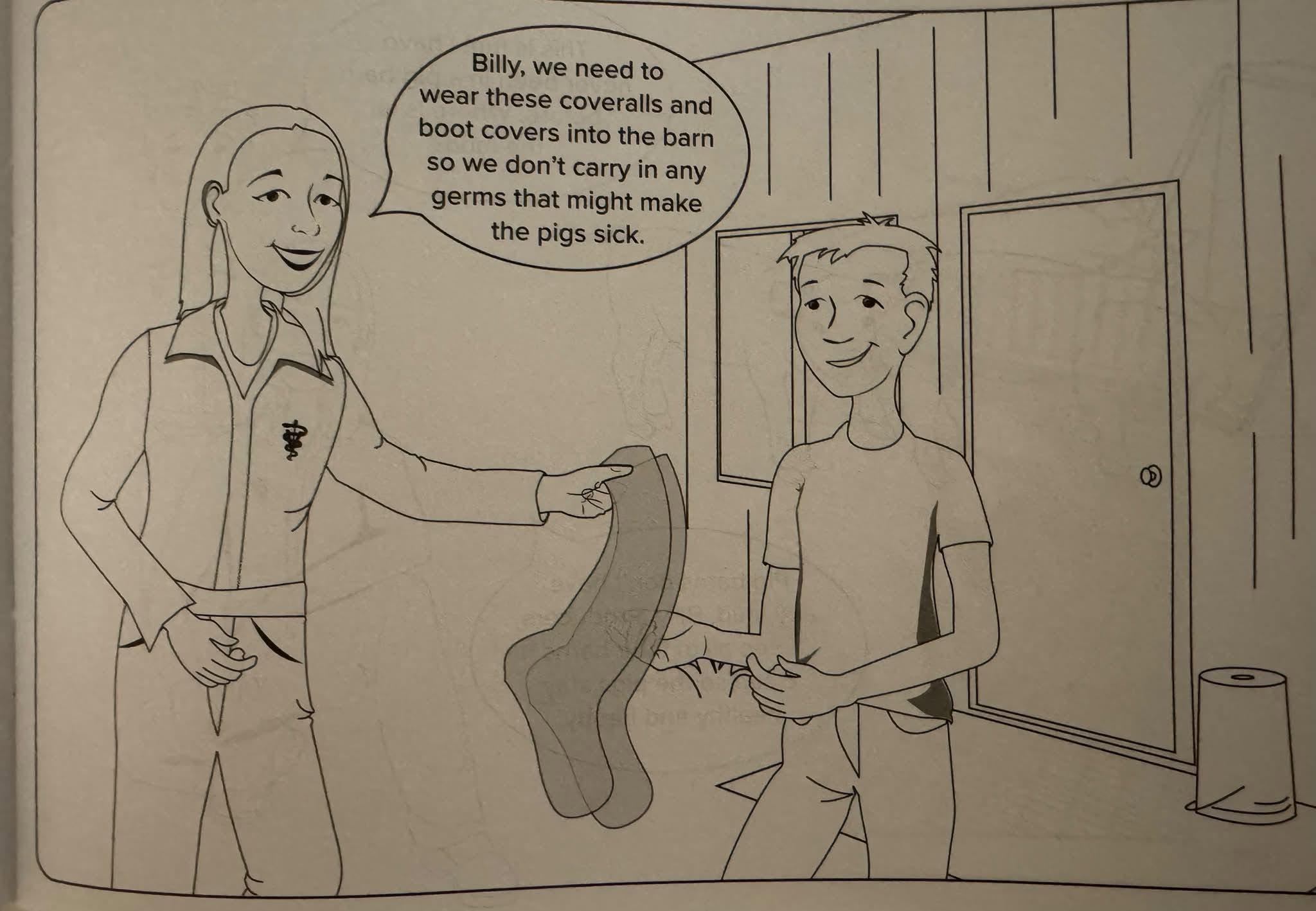
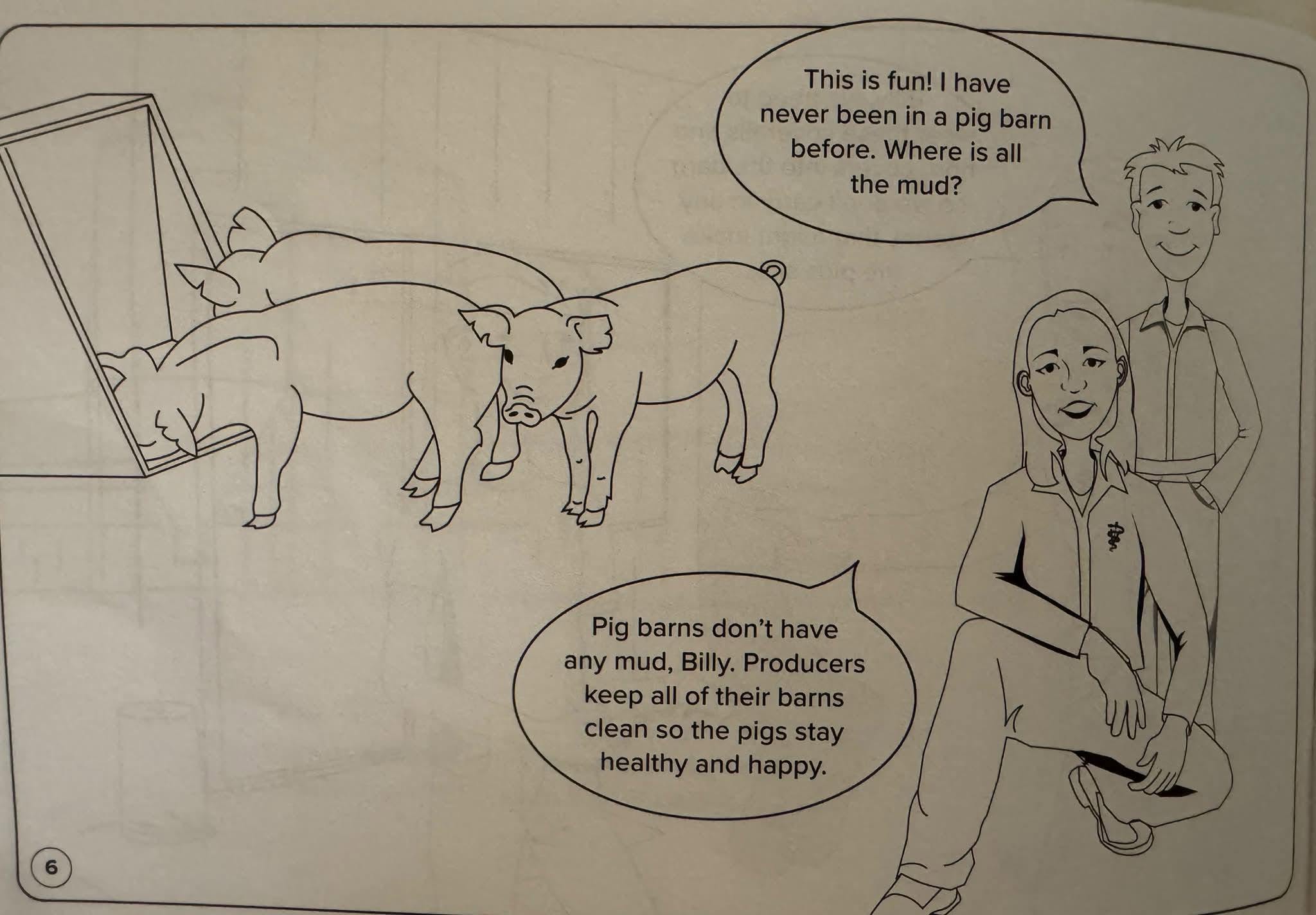
At the Minnesota State Fair, children and families are being handed a coloring book with a simple message: This is what a pig farm looks like. Seems harmless, right?
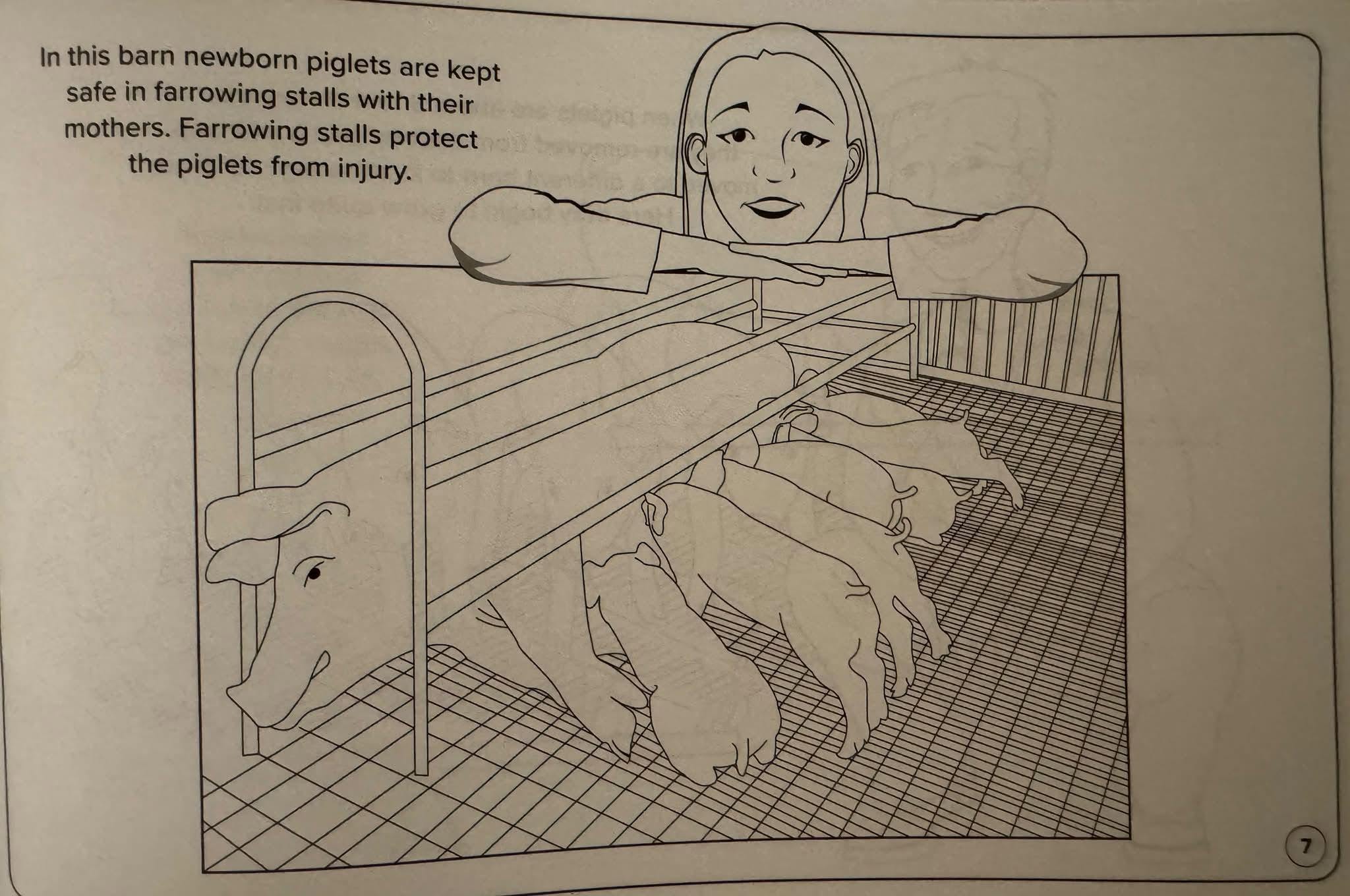
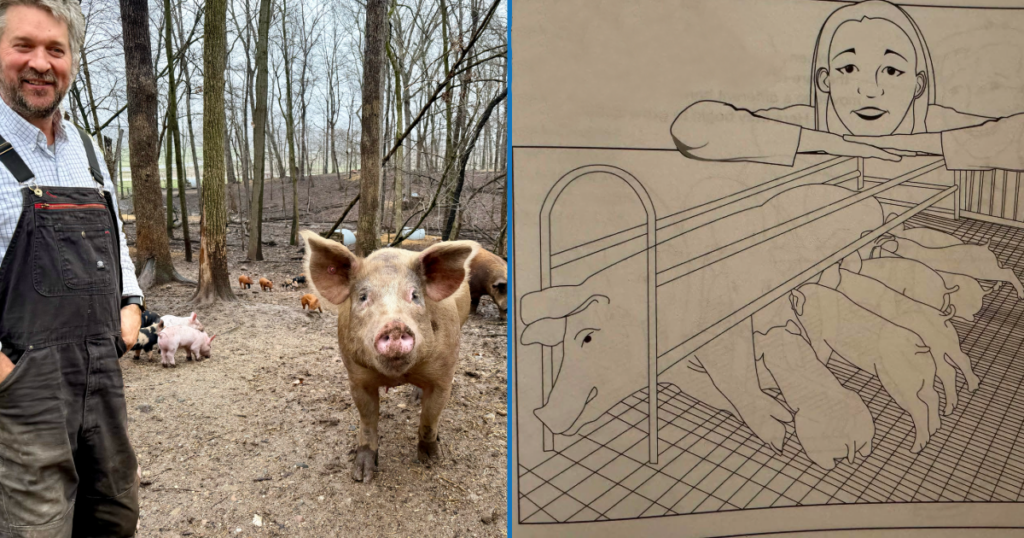
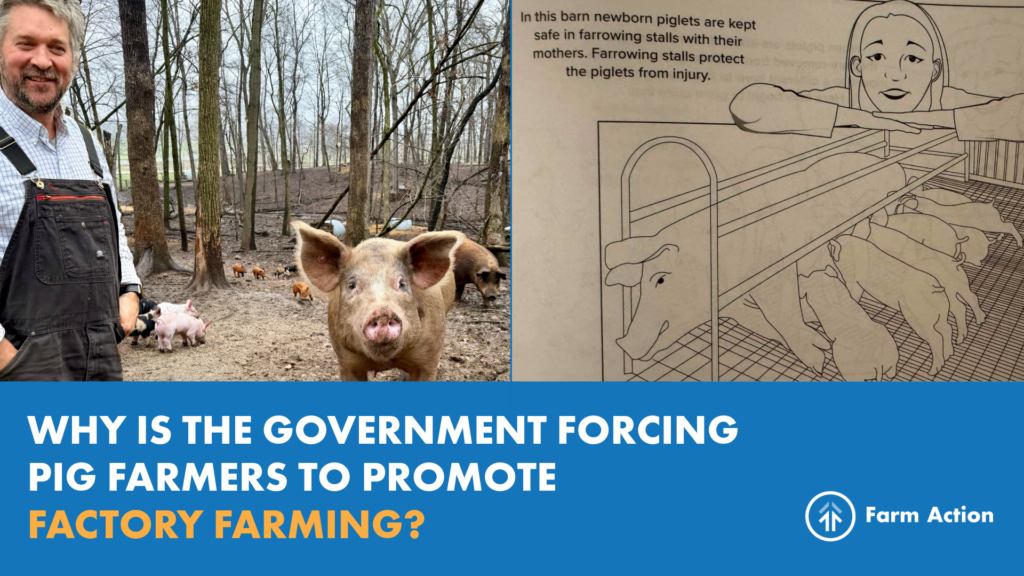
This booklet, titled “Producers, Pigs & Pork,” shows pigs raised entirely indoors. It tells children that keeping pigs away from mud helps keep them “happy and healthy.” It also shows a mother pig confined in a narrow metal crate while nursing her piglets and presents the crate as necessary to protect them.
This is not simply an educational booklet produced by a private industry group. It is funded by the Pork Checkoff, a government program that all pig farmers are required to pay into.
That includes independent farmers who raise pigs outdoors or on pasture, where pigs have room to move, root, wallow, and forage. Many use birthing systems that allow mother pigs to move freely and interact with their piglets while nursing. Yet, the government requires these farmers to help pay for messaging that promotes the indoor production methods used by large, corporate-controlled operations and makes their own farming practices appear inferior.
In other words, the government is forcing independent farmers to help promote the very system they must compete against.
All Pig Farmers Pay. The Checkoff Promotes One Production Model.
For decades, farmers have been told to “get big or get out”, which is reflected in government policies and market forces that reward scale. That pressure is further reinforced when mandatory checkoff dollars promote industrial production as the norm.
The result is a pork industry increasingly dominated by fewer, larger operations controlled by giant meatpacking corporations. Many pig farmers had little choice but to contract with large corporations requiring industrial production models, or be driven out of business.
The results speak for themselves: Between 1980 and 2022, the number of pig operations shrank by more than 70% even as total production rose. In Minnesota specifically, where this booklet was handed out, the state has lost more than 55% of its pig farms in the last two decades.
For independent pig farmers, competing against this increasingly consolidated system is already difficult. When the Pork Checkoff then uses their own money to further promote the industrial model, it reinforces the very system that has made it harder for independent farmers to compete.
Checkoff Dollars Shouldn't Pick Winners and Losers
The Pork Checkoff coloring book is just one of many examples of abuse uncovered within mandatory checkoff programs, underscoring the need for greater accountability and reform.
Mandatory checkoff dollars should promote the commodity without favoring one production system over another or picking winners and losers among the farmers who pay into the program.
Take a deeper dive into the government checkoff abuses that Farm Action has uncovered by clicking here.
The photos featured in this story were provided by Sonja Trom Eayrs. Eayrs published a book, Dodge County, Inc., which documents her farm family’s decades-long fight against industrial agriculture in their rural Minnesota community.