By Lucy Sears
When federal investigators initially identified Taylor Farms’ iceberg lettuce as the likely source of a multistate Cyclospora outbreak, the company quickly became the focus of national attention.
Days later, the U.S. Food and Drug Administration (FDA) announced that a laboratory result on one lettuce sample was a false positive but said the update did not change its investigation into Taylor Farms’ recalled lettuce from central Mexico. The back-and-forth left many people asking the same question: Was Taylor Farms responsible?
But the controversy raises another question: If it isn’t Taylor Farms, then who?
The list of possible sources is surprisingly short. After decades of consolidation, just a handful of companies supply much of America’s fresh-cut salad.
Meet the Short List
Just four companies—Taylor Fresh Foods, Cultrale-Safra, Itochu, and Bonduelle—control 54% of the U.S. fresh-cut salad market.
That means if Taylor Farms is ruled out, the traceback is still likely to remain focused on these dominant suppliers.
Most Americans have never heard of these companies, yet they supply fresh-cut produce to grocery stores, restaurants, schools, hospitals, and foodservice operations across the country.
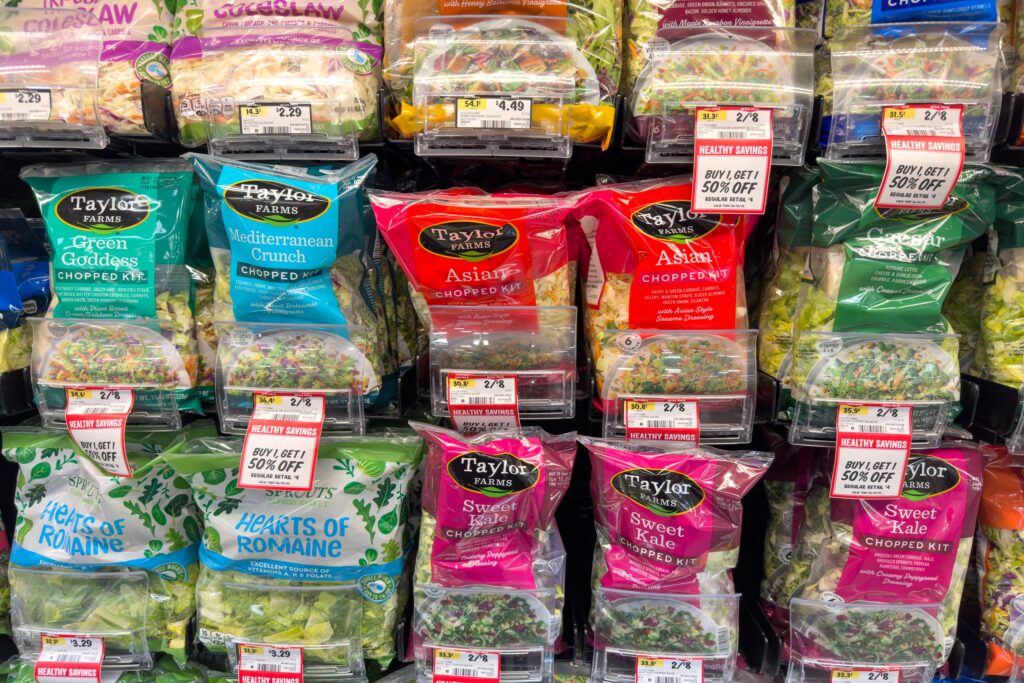
Taylor Farms, for example, supplies fresh-cut produce sold under store brands such as Walmart’s Marketside and Kroger’s Private Selection, as well as to restaurant chains including Taco Bell and Chipotle.
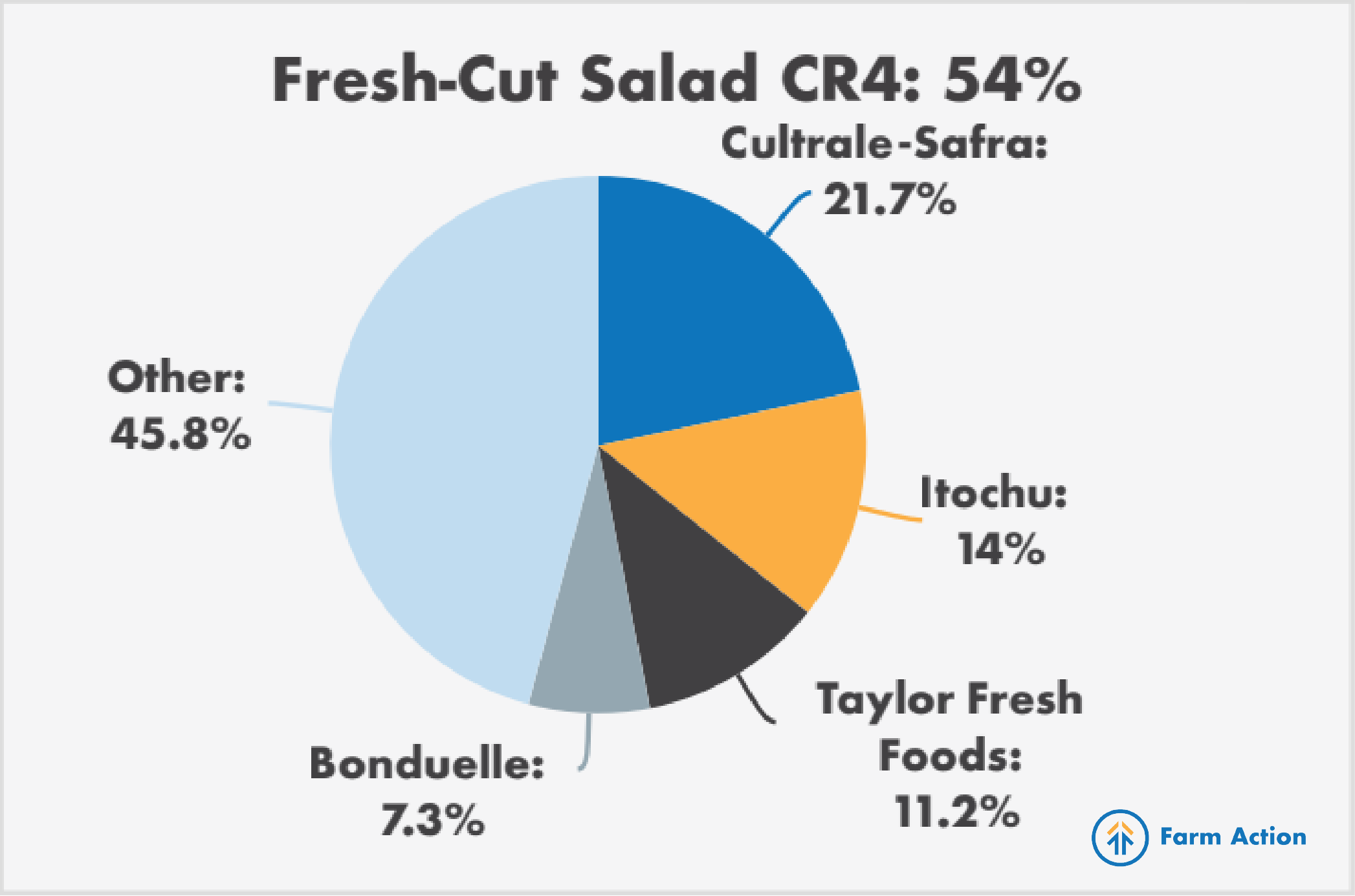
Just four companies control 54% of the U.S. fresh-cut salad market, leaving much of the country’s supply in the hands of a small number of national companies.
For a food system that feeds millions of Americans every day, that’s a surprisingly short list.
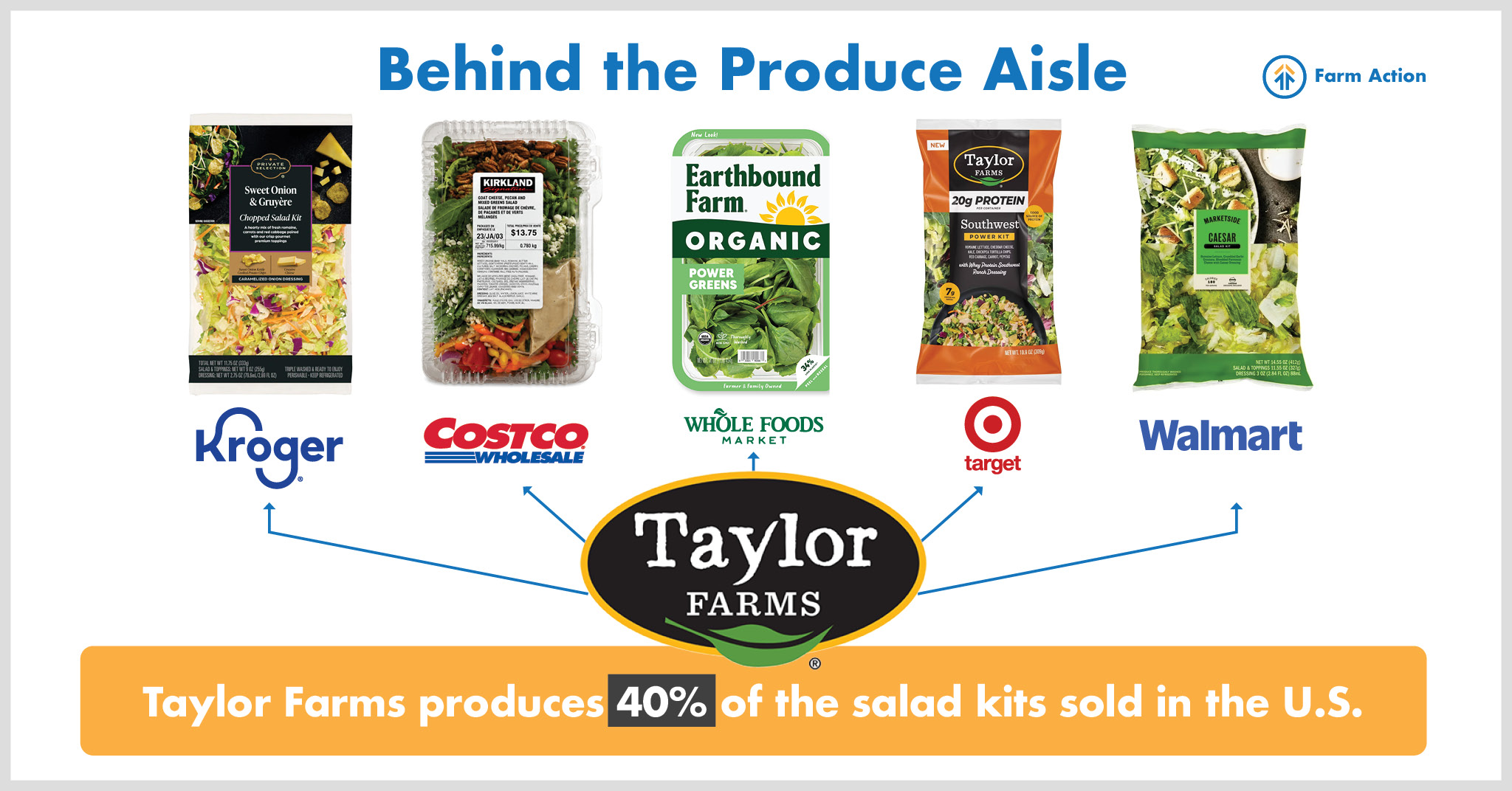
The produce aisle may look full of competing brands, but much of the fresh-cut salad sold under grocery store labels is supplied by the same company.
How Did It Get This Way?
The answer lies in decades of consolidation that reshaped how produce is grown, marketed, and sold.
Not long ago, produce farmers had numerous ways to sell their crops and many buyers competing for their business. That changed as grocery retailers, wholesale distributors, processors, and foodservice companies consolidated. As a handful of buyers gained more power, they increasingly bypassed traditional marketing channels and contracted directly with grower-shipper-packers (GSPs)—companies that harvest, pack, market, distribute, and increasingly coordinate production on behalf of growers.
Today, approximately 80–90% of fresh produce is marketed through GSPs like Taylor Farms, and just 20 large investor-owned GSPs now dominate the sector.
As grocery retailers demanded year-round supply from single sources, GSPs expanded through mergers, acquisitions, and vertical integration. Many evolved from regional produce marketers into multinational companies capable of sourcing produce across multiple states and countries throughout the year.
Fresh-cut salad isn’t unique. The same pattern has played out across the produce industry. Driscoll’s controls roughly 90% of raspberry sales in conventional supermarkets, while just two companies—Bolthouse and Grimmway—produce about 60% of U.S. carrots.
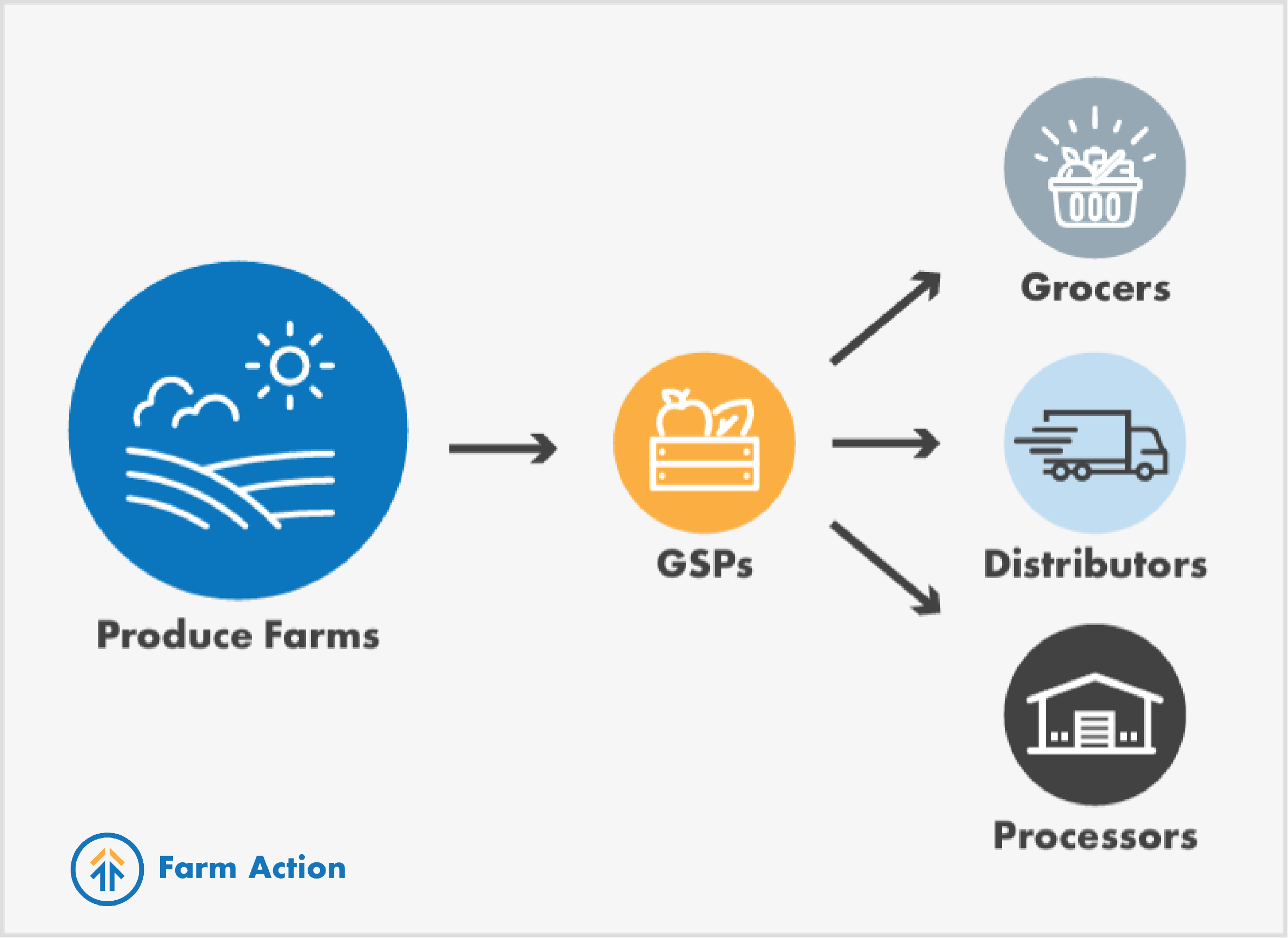
Grower-shipper-packers (GSPs) like Taylor Farms have become key gateways between produce farms and the companies that sell food across the country.
Why Concentration Matters
When so much of the nation’s produce moves through so few suppliers, a contamination event involving one major company has the potential to affect consumers across multiple states before investigators can identify the source.
The consequences extend well beyond food safety. As GSPs have grown more powerful, farmers have fewer places to sell their crops. Instead of choosing among many buyers, farmers now compete for contracts with a shrinking number of dominant companies, giving them less bargaining power.
Consumers are affected too. Longer supply chains, fewer major suppliers, and growing reliance on imported produce leave the food system less resilient and consumers with fewer choices than they may realize.
The Bigger Story
As investigators continue following the evidence, the central lesson is already clear. America’s produce system has become highly concentrated, leaving a handful of companies responsible for supplying much of the country’s fresh-cut produce.
The Cyclospora outbreak shows that America’s produce system has become concentrated enough that a disruption involving one major supplier can quickly become a national concern.
For years, Farm Action has documented how corporate consolidation has reshaped industries across the food system—from meatpacking and grocery retail to seeds and fertilizer. The produce sector deserves the same level of scrutiny.
This investigation began with one company, but it revealed something much bigger. The list of possible national suppliers is remarkably short because decades of consolidation have concentrated so much of America’s produce in the hands of a few dominant firms.
Until that changes, outbreaks like this will continue exposing the same structural weakness in America’s produce system.