By the Farm Action team
The House just passed a new Farm Bill. That may sound like progress. In reality, it leaves the same failing system in place.
The House approved the 2026 Farm Bill in a tight 224–200 vote after a messy debate over food programs, pesticides, and states’ rights. There were a few real wins. But the core of the bill still favors the largest players in agriculture while leaving independent farmers with the same uphill fight.
That’s why Farm Action opposes the bill as passed. As the debate moves to the Senate, here are some early takeaways.
A Few Wins Worth Noting
Let’s start with what went right.
Lawmakers stripped out a provision that would have protected pesticide companies from lawsuits.
If it had stayed in, chemical companies would have gained broad protection from accountability.
Just days before the vote, hundreds gathered outside the Supreme Court for The People vs. Poison rally, where Farm Action joined advocates, policymakers, and allied organizations calling out Bayer-Monsanto’s push for immunity.
The House’s decision to remove the pesticide liability shield shows that public pressure matters.
The bill also takes a step toward restoring transparency. Checkoff programs force farmers to pay into campaigns that too often benefit corporate interests, not the farmers footing the bill. A new provision that would require public disclosure of audits, budgets, and evaluations is a great step forward.
However, real reform means passing the OFF Act and stopping checkoff dollars from funding the very groups lobbying against independent farmers.
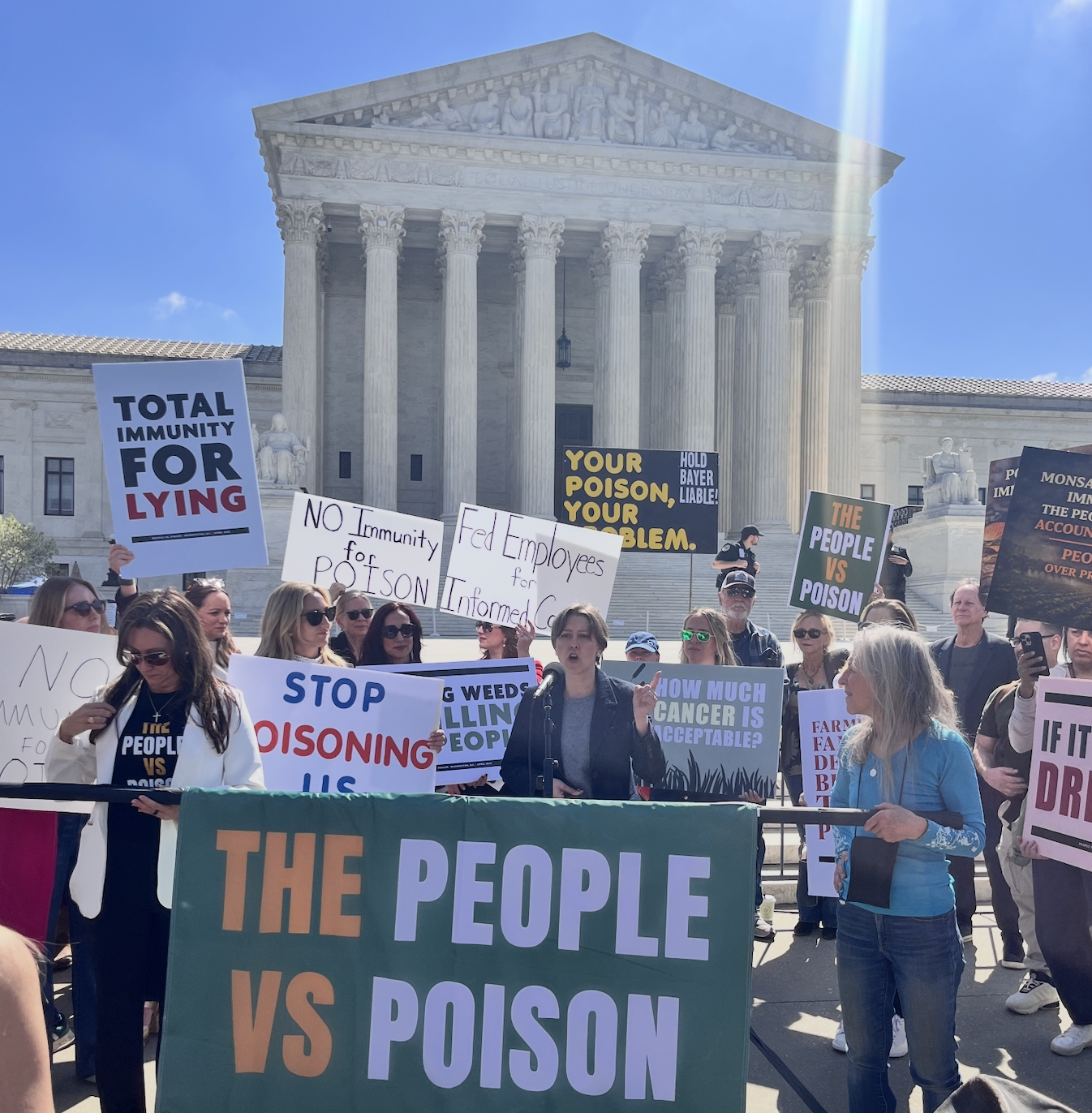
Farm Action at The People vs. Poison rally outside the Supreme Court, where hundreds gathered to oppose pesticide immunity.
The bill also includes the PRIME Act and the Strengthening Local Processing Act, both aimed at rebuilding local and regional meat processing. That could help independent producers who have struggled to find fair access to markets.
A Step Back on States’ Rights
The bill takes a serious step backward by overriding state-level agricultural policies, including California’s Proposition 12.
Prop 12 was approved by voters, and it has become a lifeline for independent hog farmers raising crate-free pork.
In a pork industry dominated by corporate giants, this market gives family farms a fighting chance to earn a better price and stay in business.
That is exactly why Big Ag wants it gone.
By wiping out these laws, Congress would take power away from states and voters while protecting the largest industrial operations from competition.
It would erase one of the few markets where independent farmers can get paid for doing things differently.
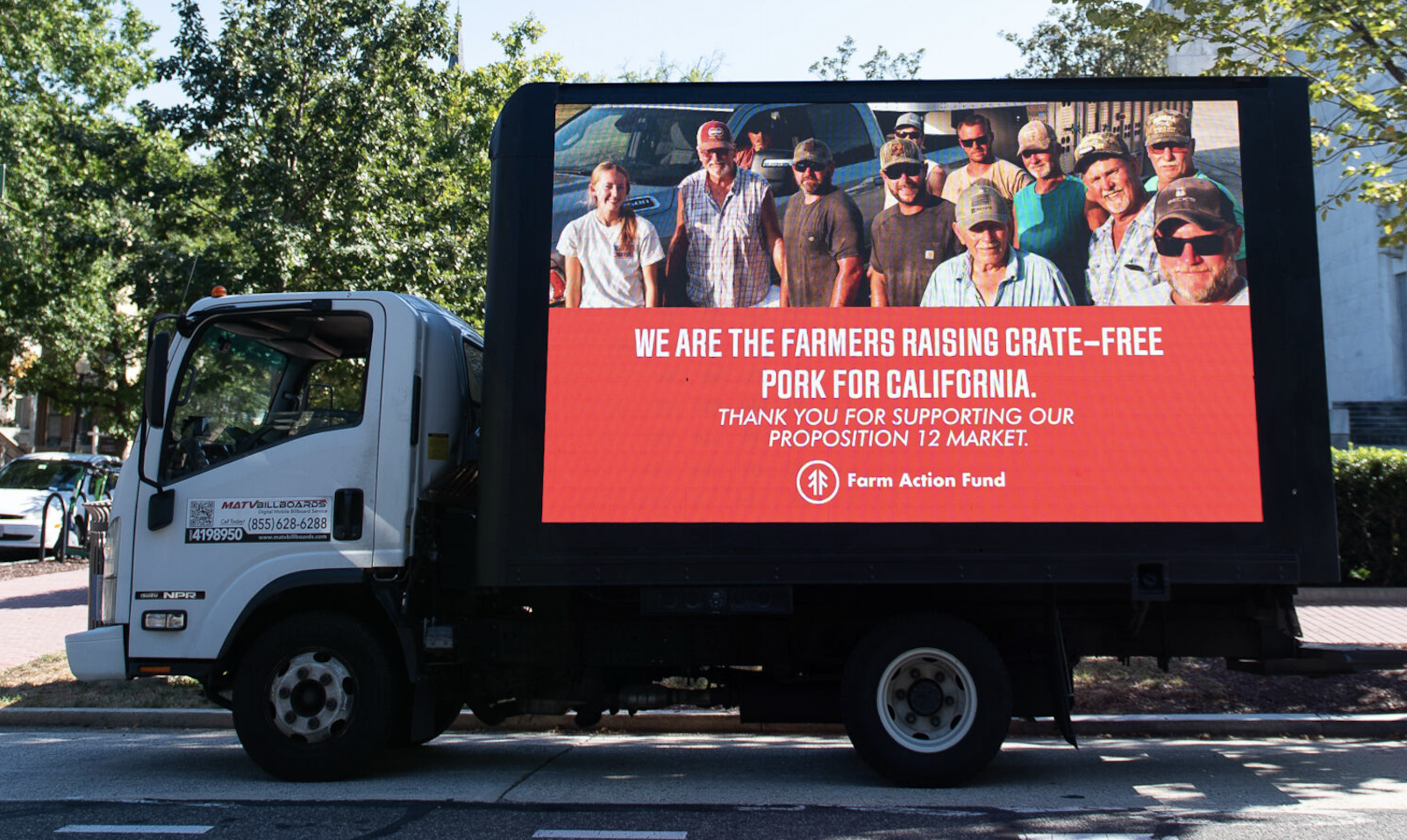
Farmers brought their message to Washington: Prop 12 created a market that helps keep farms like theirs in business.
The Structural Problem Congress Didn’t Fix
At its core, this Farm Bill keeps the same structure that has shaped agriculture for decades. Federal support still flows heavily towards a handful of the largest operations and a narrow set of crops, fueling further consolidation in already heavily concentrated markets.
That leaves independent farmers with fewer suppliers, fewer buyers, and less power every year. As a result, farmers are pushed to produce more, markets get flooded, prices fall below the cost of production, and the government steps in with bailout payments. Then the cycle starts again.
What Happens Next
The path forward is uncertain. The Senate could take up the House bill, revise it significantly, or advance its own bill instead.
There are pieces worth keeping. But the larger pattern remains: power stays concentrated into a few hands and independent farmers are left with fewer options.
The House vote also proved that pressure works. The pesticide liability shield was taken out because people spoke up. Now the Senate should take the next step by removing the attack on state laws like Prop 12, and going further on transparency and competition.
Farm policy can keep reinforcing a system controlled by a handful of corporations, or it can start shifting power to farmers and rural communities. That choice now sits with the Senate.
As debate continues, learn more about our priorities for a better Farm Bill. Now is the time to make your voice heard and tell Congress to protect our food and farmers.