By Emma Nicolas
In our Rethinking the Farm Bill blog series, we bring our 2026 Farm Bill policy priorities to life with stories from farmers and ranchers across the country who are navigating a food system increasingly controlled by a handful of powerful corporations.
We’re told to fill our plates with fruits and vegetables. Yet these foods—and the farmers who grow them—often receive the least support from federal farm programs.
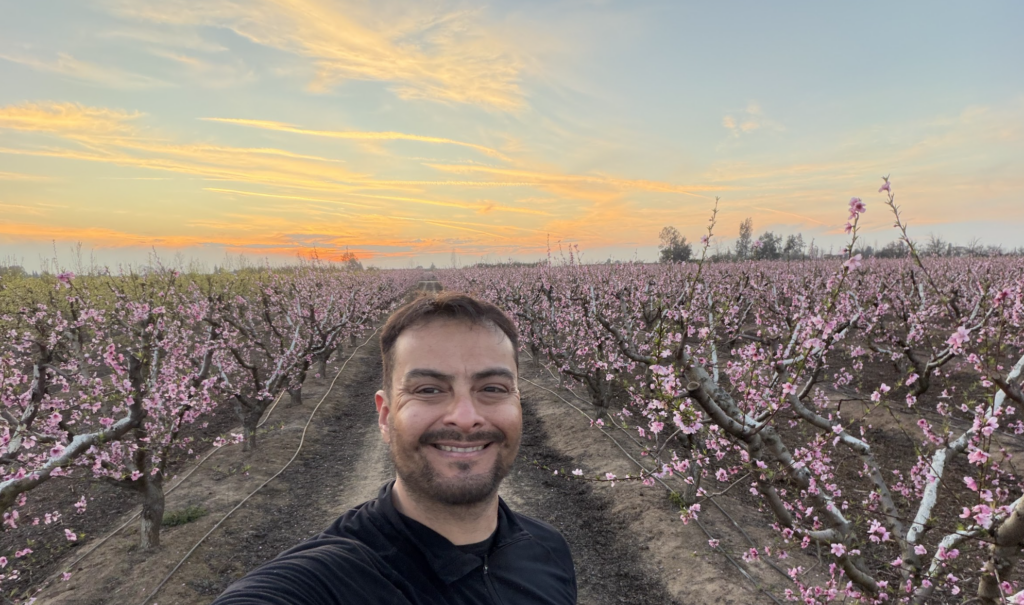
Farmers growing fruits and vegetables, classified as “specialty crops” by the government, often face major barriers to getting their food to customers. We sat down with California fruit grower Cesar Mora to discuss the challenges specialty crop producers like him face.
“The people who grow fresh food really are the least protected producers in America,” said Mora.
Congress has the opportunity to change this by strengthening protections and expanding access to support for specialty crop growers like Mora in the 2026 Farm Bill.
An Industry Ruled by Few
Mora was raised in a family rooted in agriculture. He’s been farming since his feet could reach the tractor pedals.
In the 1950s, his grandfather came to the United States through the Bracero program, in which Mexican men received visas to work on U.S. farms, and became the first generation of the family to farm—a tradition each generation has continued.
“All I’ve known is agriculture and how to grow and produce things,” Mora said.
After working with his family for most of his life, Mora started his own farm in 2016. Today, he grows stone fruits—peaches, plums, and nectarines—on 70 acres in Reedley, California.
For Mora, farming is a passion he cannot imagine giving up, but the highly consolidated system he works under makes it incredibly difficult to survive. Many specialty crop growers, like Mora, are under contract with a large company, taking their product to a processor or packing house, where it’s then sold and shipped through marketers.
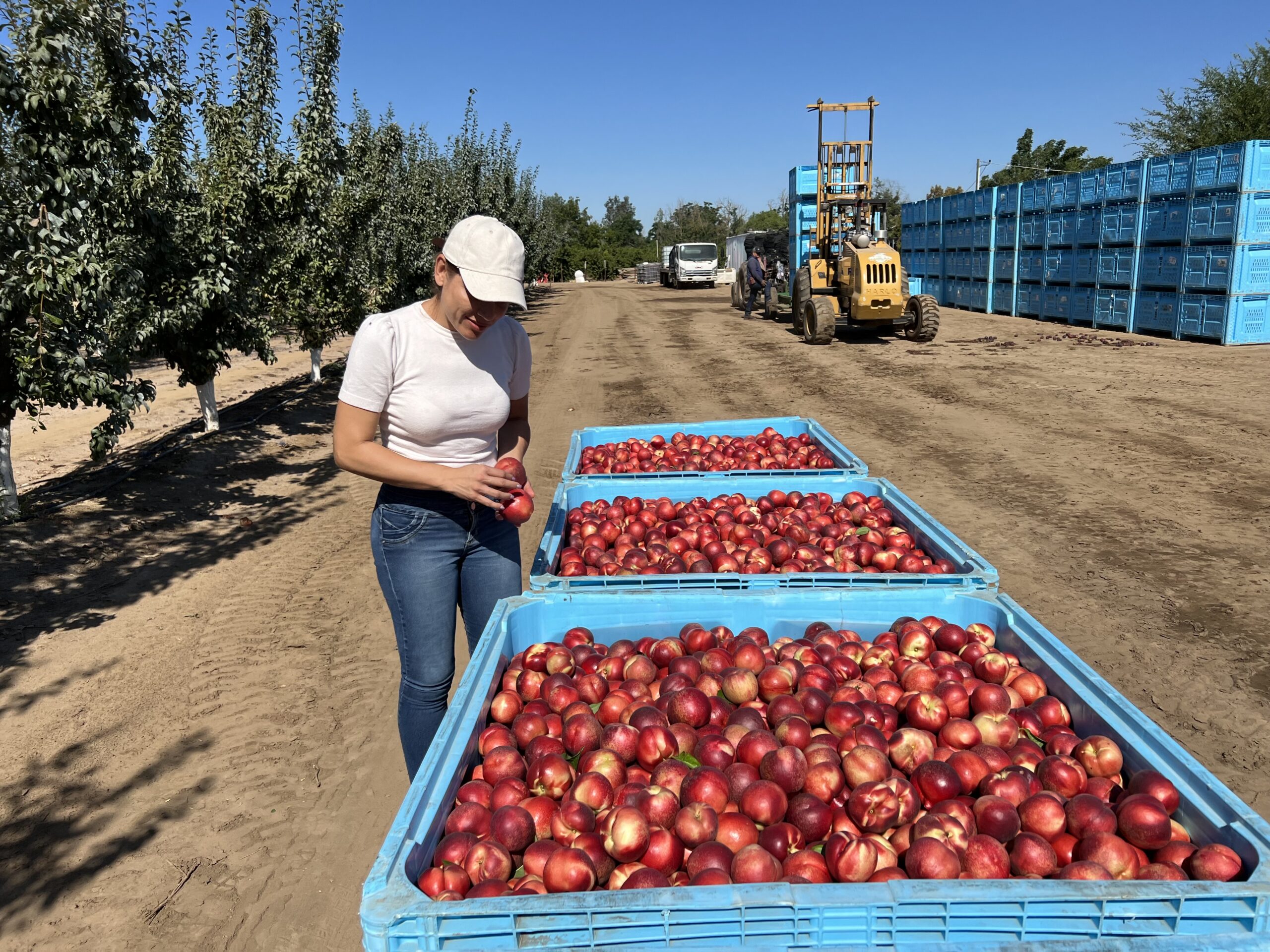
Cesar grows nectarines, peaches, and plums on his 70-acre orchard in California.
In theory, this system should remove burdens for farmers. But in practice, with so few distributors and buyers, farmers are left with no bargaining power and very little transparency—a system ripe for abuse. Mora often isn’t even sure how much his product is worth or where it’s going. It’s typically bundled with other growers’ and sold as a package.
“We are really at their mercy,” Mora said. “I absolutely wish the market was more accessible to me. I wish I could directly engage with buyers.”
Over the past few decades, consolidation has drastically narrowed farmers’ independence. The top four grocery retailers controlled 23% of the market in 1993, but by 2019, that number had increased to 69%.
Mora tried to sell independently in the past, but large corporate marketers undercut him almost immediately.
“They will find a way to eliminate your business, and they’ve done that to me,” he said.
As a result, farmers like Mora are trapped in this system. What’s worse is that the money consumers spend at the grocery store hardly makes it back to them.
“Customers are paying a very high price for the fruit I grow, but so much of it is not paid to me. It’s just captured in other ways, through charges, through shipping, through fees,” he said. “Anything they can deduct from my return—they’ll deduct it.”
The Risks of Growing Fresh Food
Market barriers aren’t the only challenges fruit and vegetable farmers face. The cost of land, labor, and inputs continues to rise, making it increasingly difficult for small and mid-sized growers to stay afloat.
Mora leases his 70 acres, and while he would like to buy the land, that doesn’t seem feasible given his other production costs and limited access to financing.
At the same time, farmers growing fruits and vegetables receive far less federal support than many commodity crop growers. Our government encourages Americans to eat more fresh food, yet only a small share of federal farm support goes to the farmers producing it.
“It’s interesting, because the recommendation is for us to eat more fruits and vegetables, but yet, the subsidies are all into corn and soybeans,” Mora said.
For specialty crop growers like Mora, one of the biggest barriers is access to effective risk management tools. Farming is inherently risky, and market shocks, price swings, and weather issues can wipe out a farm in a single season.
Federal risk management programs are supposed to help farmers survive those shocks, but they currently work best for farmers growing commodity crops like corn and soybeans, while specialty crop growers like Mora often face higher risk with fewer protections.
Crop insurance is one example. While it can provide an important safety net, the system is often far more difficult for small and specialty crop growers to access and navigate. Unlike commodity crops with standardized pricing, many specialty crop farmers don’t know the true market value of their products ahead of time, making coverage more difficult to secure.
Despite these challenges, Mora says he will keep going for as long as he can.
“I refuse to give up on my life experience and my skills,” Mora said. “It’s what I think makes farmers resilient. We deal with the weather, we deal with other elements that are out of our control, but we still keep growing.”
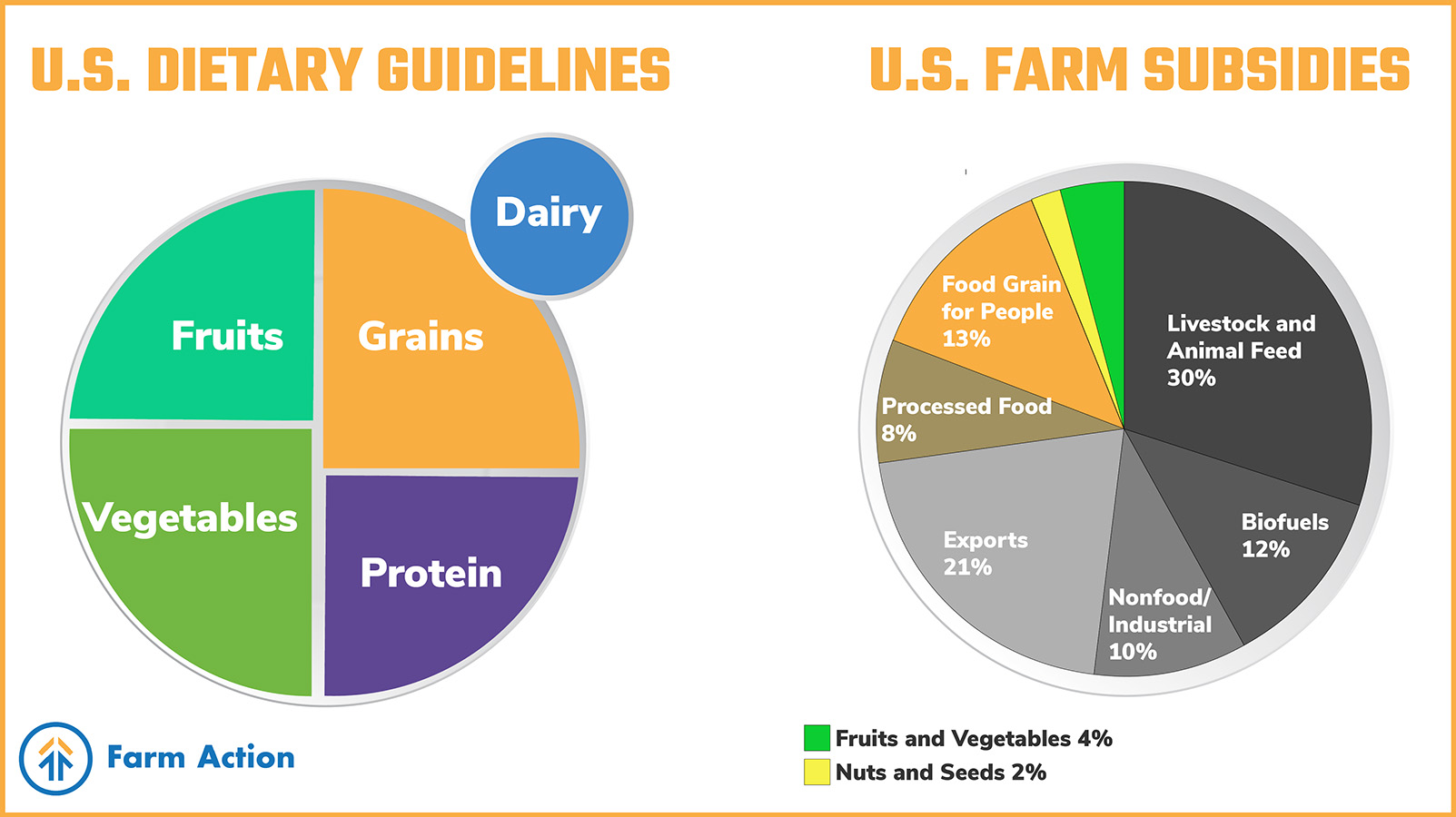
Nutrition guidelines from 2011-2025 vs. federal farm subsidies
How Congress Can Support Fruit and Vegetable Growers
Policies in the farm bill could help strengthen the farm safety net for farmers like Mora by reforming and expanding access to crop insurance and other risk management programs, while shifting subsidies towards supporting specialty and diversified crops.
This includes addressing losses caused by extreme weather and reforming crop insurance programs to make coverage more accessible to small and specialty crop farms.
Increased investment would also help more farmers stay in business, strengthen diversified production, and support the crops and farming practices that best nourish Americans.
“If Congress wants small growers like myself to thrive and survive, they have to give us the tools,” Mora said. “Without that, there’s going to be the continued decline of farmers and small farmers in the U.S.”
Why This Moment Matters
Debate is now underway in the Senate after the House passed its version of the farm bill. The decisions Congress makes will shape whether local food systems grow or continue to be pushed aside by consolidation, determining the future of our food system and who it benefits—corporations or farmers.
Learn more about what we’re fighting for and why it matters.
Coming up next in our Rethinking the Farm Bill series, we’ll tackle another of our seven priorities for farm bill reform: supporting organic, regenerative practices—a look at how Congress can expand assistance to help farmers adopt practices that improve soil health and deliver long-term environmental and economic benefits.