
By Jessica Cusworth
Based on analysis by the Farm Action policy team
Across the country, tech companies are racing to build massive data centers to power artificial intelligence (AI) and cloud storage. They’re increasingly targeting rural America, bringing familiar promises of jobs, economic growth, and investment.
Rural communities have heard this pitch before. Too often, they absorb the costs while powerful corporations reap the rewards. It’s part of a broader pattern of extractive corporate expansion that treats rural communities as places to take resources from rather than places to invest in and uplift for the long term.
As data center development accelerates, farmland, water, and energy systems are being reshaped to serve some of the world’s largest technology companies—with few protections for the people who actually live, farm, and pay utility bills in these communities.
Until lawmakers act, communities across the country will continue bearing the costs of unchecked data center development—especially in rural areas.
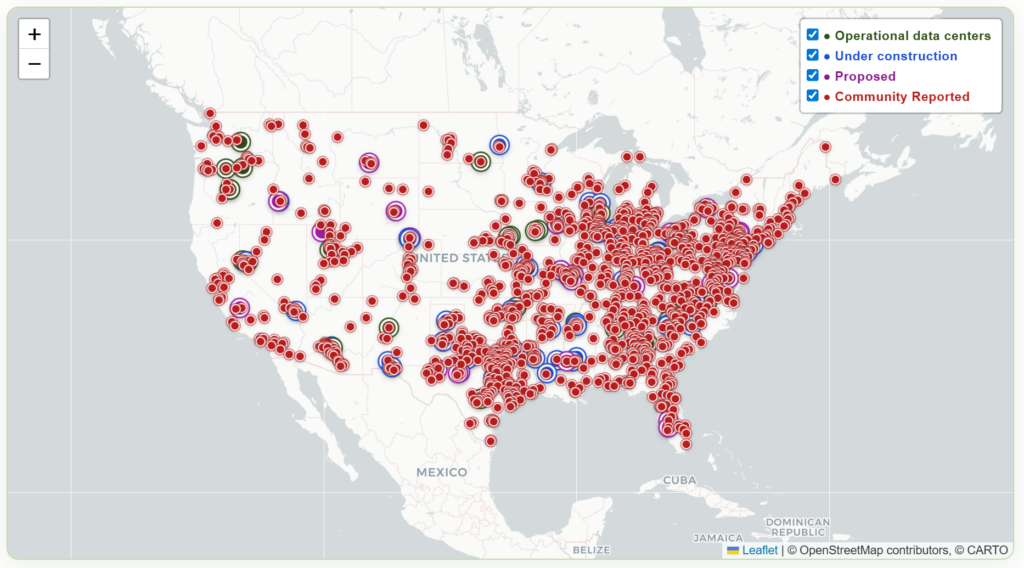
Map of AI data center sites and reported projects across the United States. Source: Brockovich AI Data Center Reporting.
How Data Centers Harm Rural Communities
Farmland Loss and Price Inflation
Farmland is the economic foundation of many rural communities. It’s a finite resource that communities rely on for food production, economic stability, and long-term resilience. Data centers threaten both its affordability and availability.
Once large-scale development enters an area, farmland starts being priced based on what developers might pay to build on it rather than what farmers can afford to pay to farm it. That drives up prices and makes it harder for farmers—especially beginning farmers—to access affordable land, a trend that Farm Action has long been sounding the alarm about.
Over time, these pressures accelerate farmland consolidation and permanently convert more agricultural land out of farming.
Rising Electricity Costs for Rural Residents
Data centers require enormous amounts of electricity to operate. Supporting them often requires major investments in power generation and infrastructure, driving up electricity costs to pay for them.
This rapid growth in data centers and other energy-intensive demands created by cryptocurrency could increase average U.S. electricity costs by 8% nationally by 2030, with increases exceeding 25% in parts of the Mid-Atlantic region.
These increased electricity costs are particularly problematic for farmers and rural residents: Agriculture depends heavily on electricity for irrigation, grain drying, cold storage, food processing, and equipment—farmers cannot simply stop using electricity when prices spike.
Pressure on Water Supplies
Data centers consume enormous amounts of water for cooling systems. A medium-sized data center can use roughly 110 million gallons of water each year, while some large facilities may consume up to 5 million gallons per day.
Many rural communities already rely on groundwater and aquifers that are under stress from drought and weather variability. In agricultural regions, overuse of local water resources directly threatens farm viability. Water is a critical agricultural resource—rural communities should not risk depleting their supply to cool AI infrastructure.
Taxpayers Subsidizing Corporate Infrastructure
Data centers are not just private investments. They are often publicly supported through tax abatements and other incentives designed to attract development, meaning taxpayers in rural communities are helping finance infrastructure that gives dominant tech companies even more control and power.
Many states offer generous tax abatements and incentives for data center construction. These subsidies can reduce local tax bases, shift infrastructure costs onto residents, and deliver relatively few permanent jobs compared to the scale of investment involved.
This means that resources that could otherwise support schools, roads, or local businesses are redirected toward corporate expansion.
Taken together, these pressures point to a bigger problem: rural communities are being asked to give up farmland, strain local water and energy systems, and subsidize infrastructure built to serve some of the richest corporations in the world.
It's Time to Pump the Brakes
Farm Action joined farmers, ranchers, and rural organizations calling for a pause on new data center development until stronger protections are in place.
Building on that effort, Farm Action is advocating for additional safeguards to ensure data center expansion does not come at the expense of farmers, rural residents, and local communities.
This includes:
- A temporary moratorium on new hyperscale data center approvals until impact assessments and protections are established
- An end to taxpayer-funded subsidies and incentives for data center development
- Strong protections for farmland, water resources, and electricity consumers
- Policies ensuring data center developers—not farmers and rural residents—pay the full cost of infrastructure expansion
- Mandatory public reporting on electricity and water use
- Greater local control and transparency over siting decisions, utility impacts, and land use changes
These basic guardrails would ensure that the giant companies driving the data center boom are held accountable for their impacts, and that rural communities have the protections needed to make informed decisions about their land, water, and resources.