By Emma Nicolas and Jessica Cusworth
In our Rethinking the Farm Bill blog series, we bring our 2026 Farm Bill policy priorities to life with stories from farmers and ranchers across the country who are navigating a food system increasingly controlled by a handful of powerful corporations.
America’s food system isn’t set up to get food from independent farmers to their communities. Decades of consolidation and underinvestment have left farmers and consumers reliant on long, vulnerable supply chains controlled by a few companies.
But the collapse of local and regional food systems wasn’t inevitable—it was the result of deliberate choices, and people are working to change it.
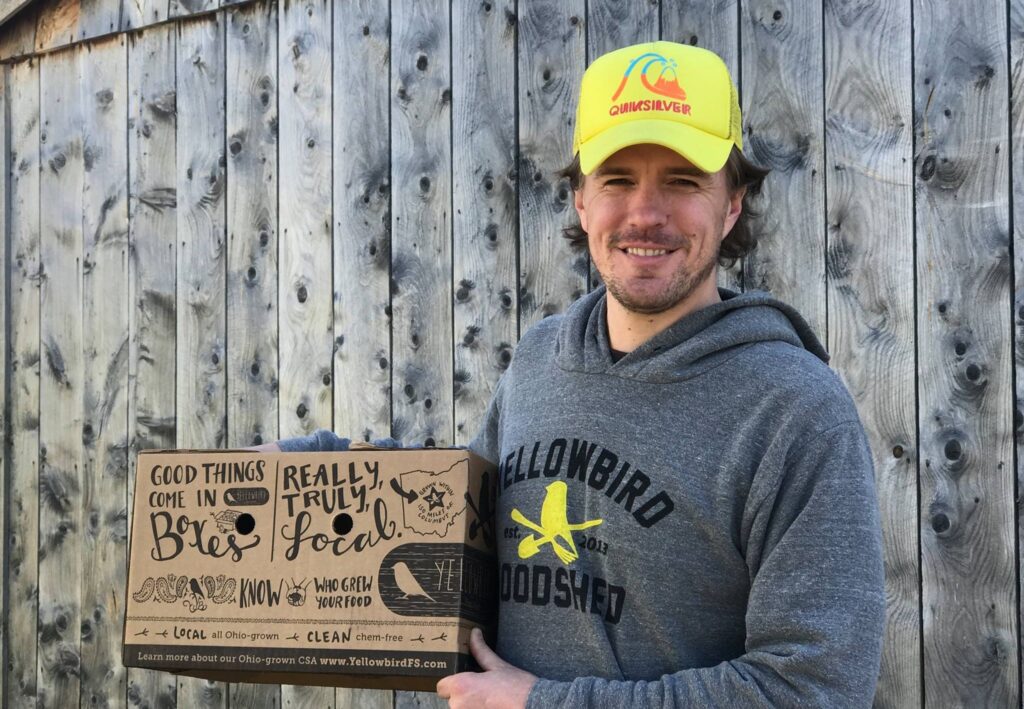
We sat down with Benji Ballmer, co-founder of Yellowbird Foodshed in Mount Vernon, Ohio, to discuss what it takes to reconnect farmers with their communities.
“I’m trying to raise up a system under the nose of Big Food and create a foodshed that is a group of growers and a group of eaters that are saying, ‘I don’t really want anything to do with that system,’” Ballmer said.
Ballmer’s work rebuilding local food systems not only benefits farmers but also expands access to healthy, locally grown food. With the right policies included in the 2026 Farm Bill, Congress can help grow and scale efforts like his by investing in programs that enable farmers to feed their communities instead of reinforcing a system dominated by a handful of corporations.
Building a Local Food Hub
When Benji and his family moved to Mount Vernon, Ohio, 12 years ago, their goal was to help rebuild the local food system. After starting their own farm in a rural town a few hours north, they quickly realized there was a different route ahead.
“We were going to go try to build a solution to the bigger problem,” Ballmer said.
Ballmer saw that smaller and mid-sized farmers lacked access to distribution. Farmers used to have multiple avenues for selling their products, but decades of consolidation across food and farm sectors have drastically narrowed their options. In the retail grocery sector alone, just four companies control 69% of the market, limiting who gets shelf space and on what terms.
This led the Ballmer family to create Yellowbird Foodshed, a food hub that connects hundreds of people throughout central Ohio to local farmers and business owners every week through pickup and delivery of farm-fresh foods.
Yellowbird works much like an online grocery store: customers order online, Yellowbird fulfills those orders with local producers, and packages them for pickup or delivery. Over the last decade, they’ve started working with farmers to carve out plans for the entire season based on customer preferences.
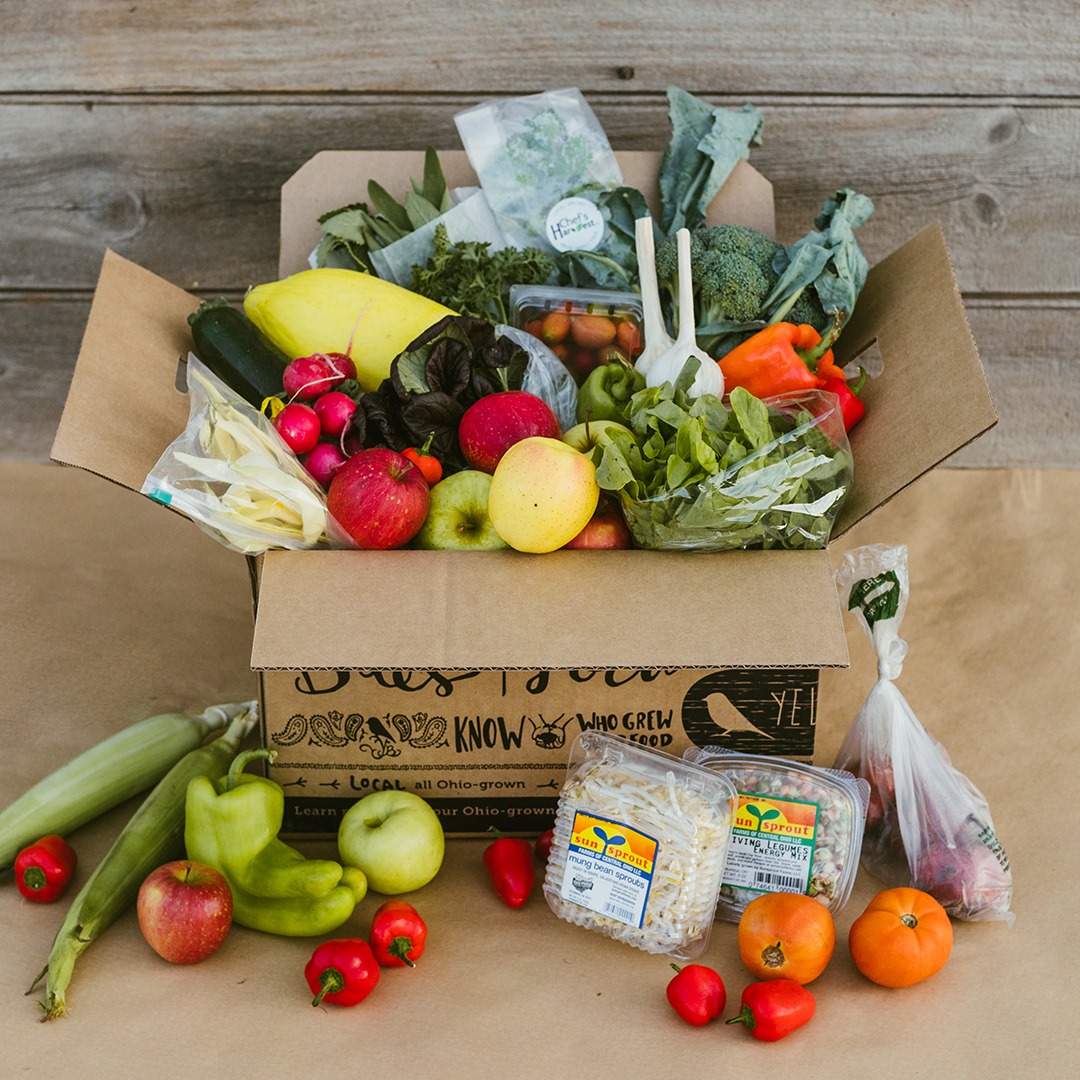
Yellowbird Foodshed packages and distributes food from local farmers and businesses to the community.
They’ve also made it easy for customers to learn about the farmers they’re buying from, so they develop a stronger relationship with where their food comes from.
As Ballmer puts it, “All we are is the Velcro that’s trying to get the two of you together, as a customer and a grower.”
As the Ballmers work to create new infrastructure from scratch, the obstacles have been plenty. But the payout has allowed local, independent farmers to more easily feed their communities and connect more deeply with their customers.
Ballmer says Yellowbird is trying to make the realities of farming visible—and understandable—to customers. For example, when corporations raise prices during a crisis, Ballmer says it creates an opportunity to show that local food systems are often more stable.
“We want everybody to see transparently what’s happening all the time, so that you know what you’re paying for. You know what your money’s going to, you know why the system is so hard and so set against small-time growers being able to make it financially.”
How Congress Can Support Local
Rebuilding local food systems requires a shift in how communities are fed and supported.
One of the most powerful tools for rebuilding local and regional food systems is redirecting government food purchasing dollars away from dominant corporations and toward local farmers. Programs like the Local Food Purchase Assistance Cooperative Agreement Program (LFPA) do just that and have a track record of success.
In Ohio, LFPA funding directed millions of dollars toward locally grown food for food banks. Ballmer says this enabled local growers to scale up their operations, knowing that they could rely on these contracts for the next few years, while also feeding the community local, nutrient-dense food.
“We were building farm boxes. We were buying more food than we ever bought. We were telling our growers, grow more food than you’ve ever grown,” Ballmer said.
Last year, the current administration canceled $1 billion in funding for local food purchasing programs like LFPA, which Ballmer said was disappointing, but he hopes to see it brought back in the farm bill. Ballmer had never taken federal funding before and generally prefers not to rely on it, but he believes this program was an effective use of taxpayer dollars.
“After seeing what I saw and the good that came from it, I would love for them to earmark some dollars that were going into that local food economy,” Ballmer said.
There are a host of bills that would support local food if Congress included them in the 2026 Farm Bill.
“If it was done correctly, there needs to be 100 Yellowbirds in Ohio alone. The circles need to get smaller, not bigger,” said Ballmer.
Why This Moment Matters
Debate is now underway in the Senate after the House passed its version of the farm bill. The decisions Congress makes will shape whether local food systems grow or continue to be pushed aside by consolidation, determining the future of our food system and who it benefits—corporations or farmers.
Learn more about what we’re fighting for and why it matters.
Coming up next in our Rethinking the Farm Bill series, we’ll tackle another of our seven priorities for farm bill reform: how to support our specialty and diversified crop farmers—a look at how U.S. farmers producing nutritious fruits and vegetables often get left behind.