By Emma Nicolas
We recently launched our 2026 Farm Bill platform, outlining seven priorities to restore fairness and competition to our food system. In this new blog series, Rethinking the Farm Bill, we’ll bring these policies to life with insights from farmers and ranchers across the country who are navigating a food system increasingly controlled by a handful of powerful corporations.
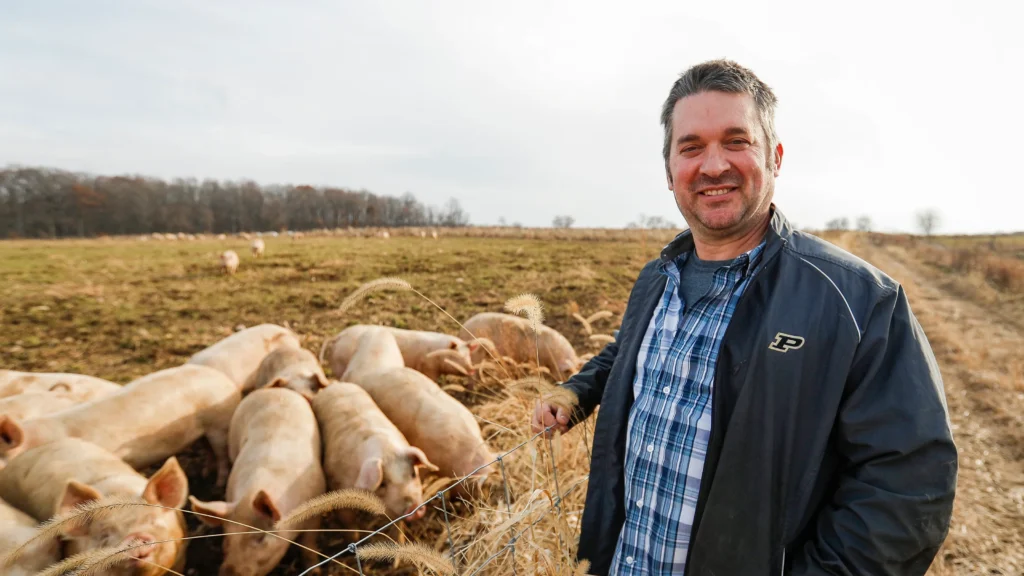
For our first installment, we sat down with fourth-generation Indiana farmer Greg Gunthorp to talk about one of the most overlooked tools in the farm bill: federal food purchasing.
As the nation’s largest food buyer, the U.S. government spends billions each year on contracts to supply schools, military bases, food banks, and other public programs.
These purchases—known as food procurement—don’t just fill plates. They quietly shape the entire food system. The problem is that these food procurement dollars, which could create a critical lifeline for small-scale and independent farmers and food processors, largely wind up in the hands of the largest food and agriculture companies.
It’s time for that to change, and we have an opportunity to make it happen now.
On the Farm: A Fight for Survival
For Greg Gunthorp, that imbalance isn’t theoretical—it’s something he’s been navigating for decades.
Gunthorp’s business has been evolving ever since he and his wife started their own farm in the 90s. By 1998, they were selling pigs for less than his grandfather had sold them for during the Great Depression. Corporations now owned the entire process, to the point that there was little opportunity for independent farmers like the Gunthorps. They knew they had to find a new way to market their pigs in order to survive.
“Virtually every generation has had to make significant changes and flexes, and we’re really no different than that,” Gunthorp said.
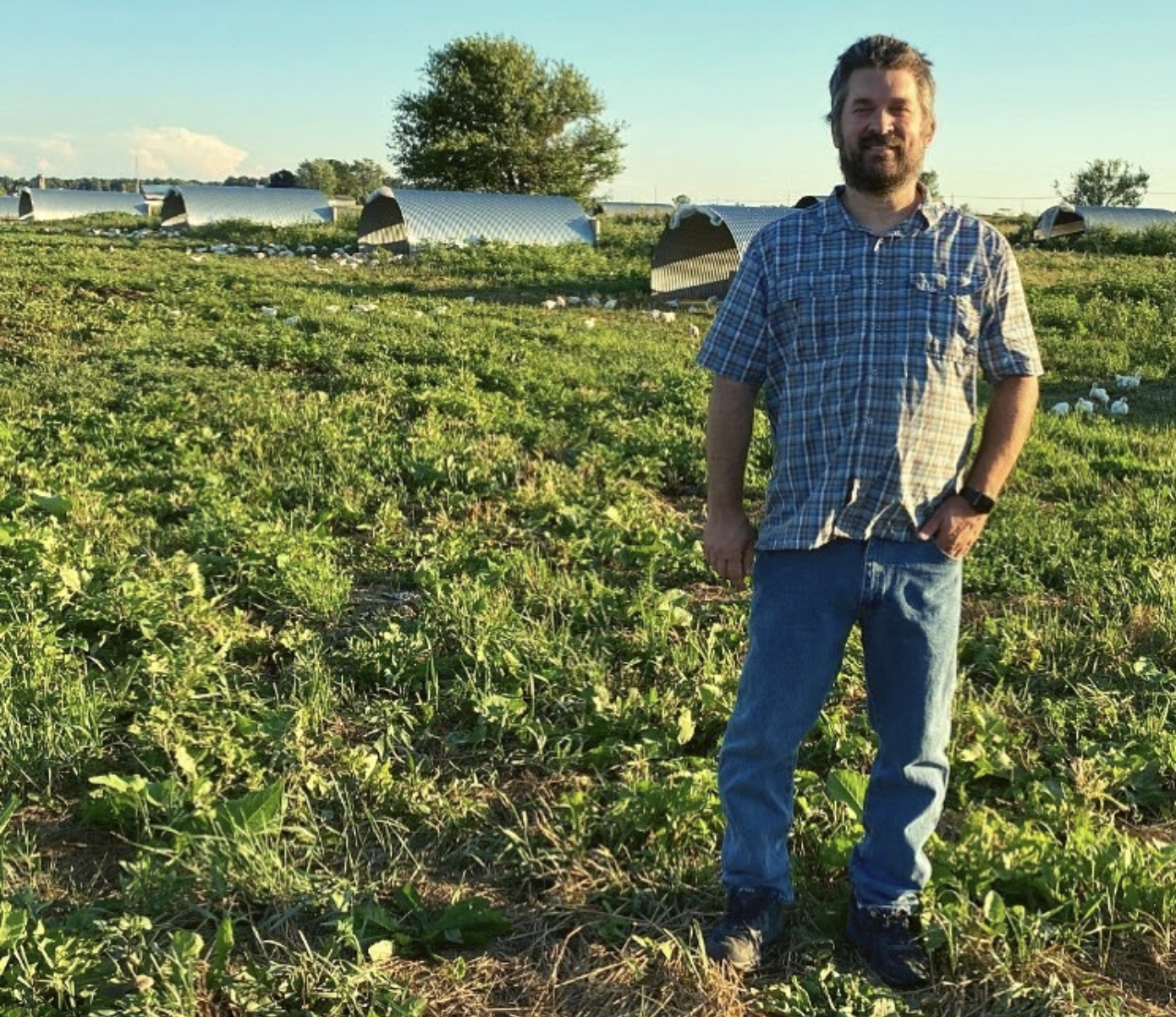
The Gunthorps have created a business model that’s kept them afloat by shifting to selling pastured-raised pork, poultry, and lamb directly to restaurants and airports, and doing on-farm meat processing. But once again, they are at risk of being crowded out of the market by powerful corporations. The data paints a picture of what farmers like the Gunthorps are up against: For example, just four companies control 70% of the pork industry, making it increasingly difficult to get an edge.
“The big guys have invaded virtually every niche that we’ve created,” Gunthorp said.
That’s where government food procurement could create reliable market opportunities, helping to level the playing field. Gunthorp points out that the scales are tipped against farmers like him because industrial agriculture is propped up not only by direct subsidies, but also by what he calls “indirect subsidies,” like food procurement dollars.
“The industrial system gets huge amounts of direct, indirect, and federal procurement dollars. And those of us local food producers get just about zero of those dollars,” Gunthorp said, questioning why supports are only available to industrial agriculture production.
Meanwhile, independent farmers, like Gunthorp, face constant risk while always standing on shaky ground. He explains that because scaling up his operation could leave him with full freezers if he loses a customer, the reliability of a government procurement contract would provide a crucial safety net. And it’s a win-win because in turn, the government would strengthen the local food supply chain, enabling local farmers to provide their communities with fresh, healthy food.
“The time to build those relationships is now,” Gunthorp said, referencing past supply chain disruptions. “Rather than when you’re scrambling because there’s no food on the shelves.”
The Power of Government Food Procurement
By directing billions of dollars in food procurement contracts to the largest and most powerful companies, such as Tyson and Brazilian-owned JBS, the government reinforces corporate control over our food system. The system is currently set up to buy and feed Americans the cheapest food possible, and its impact goes far beyond independent farmers.
It weakens our supply chains, enables the continued hollowing out of rural America, and degrades the quality of food available through public programs like those served at schools and food banks.
The current system is also at odds with other taxpayer-funded investments for creating and expanding local and regional meat processors and distributors. Without access to a steady market, many of these new businesses are at risk or have already closed up shop. As Gunthorp says, food procurement dollars could actually create vibrant rural communities.
“As taxpayers and as a government, should we be putting our money into something that has more factors than just providing the cheapest calories?” said Gunthorp. “Or should we be putting a portion of our money into something that’s actually rebuilding rural communities?”
And for the first time in years, a farm bill is on the table, which means Congress could make this change right now.
Why This Moment Matters
Debate will begin soon on the 2026 Farm Bill, which has the power to determine the future of our food system and who it benefits—corporations or farmers.
“I think what’s at stake is this continued erosion of the number of processors and the number of [farmers] that produce actual food,” said Gunthorp of the 2026 Farm Bill.
Food procurement is on the table for this farm bill, and there are already proposed solutions in Congress, like the Strengthening Local Food Security Act and the EFFECTIVE Food Procurement Act, that would help direct federal food purchasing dollars to boost local and regional supply chains.
In practice, Gunthorp says he’d like to see carve-outs for vetted local producers and processors, ensuring corporations cannot weasel their way into accessing additional support.
The benefits of locally focused food procurement extend far beyond the farm—it boosts rural economies, puts healthier foods on the table, and strengthens both national and food security.
“If people stop and think about it, they’ll realize it just makes a lot of sense,” said Gunthorp.
As the 2026 Farm Bill debate heats up, you can make your voice heard right now in support of independent farmers.
TELL CONGRESS: PROTECT OUR FOOD AND FARMERS
Coming up next in our Rethinking the Farm Bill series, we’ll tackle another of our seven priorities for farm bill reform: Defending States’ Rights and Farmer Protections—a look at how the farm bill could strip states’ rights to govern local food systems and how that could rob farmers of opportunities.