A Debate Fit for Farm Country: Analysis of Monday’s Ag Policy Debate
The farm policy debate served as an early window into how both presidential candidates would approach agricultural policy in their administrations.

The farm policy debate served as an early window into how both presidential candidates would approach agricultural policy in their administrations.

Farm Action submitted a public comment commending the U.S. Department of Agriculture (USDA) for its Fair and Competitive Livestock and Poultry Markets proposal.

Kamala Harris’s agenda includes policies like blocking unfair mergers and a first-ever federal ban on price gouging.

How does our food make it from the farm fields to the table? The answer used to be simple, but in the past 100 years, it’s gotten a lot more complicated and increasingly hidden from the public eye.
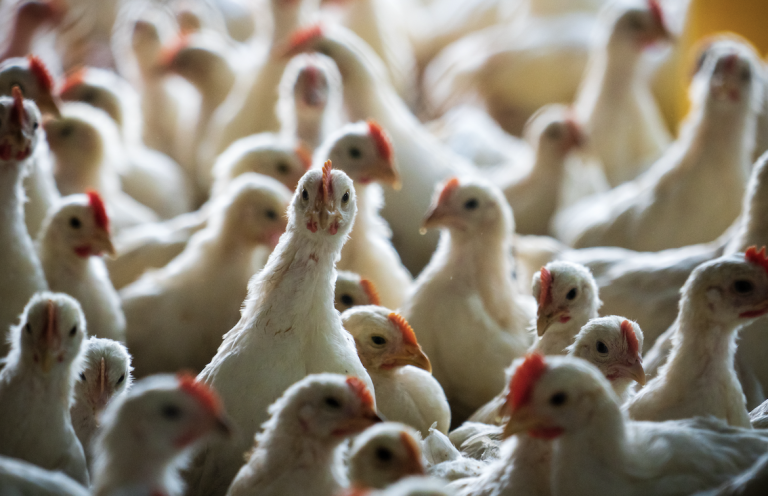
Farm Action submitted a public comment urging the U.S. Department of Agriculture to revise its proposed rule by eliminating the predatory poultry tournament system.

The industry has what they call a “tournament system” which helps suppress what is paid to a farmer.

“In all of these cases they’re using a convenient excuse to price gouge,” said Angela Huffman, president of Farm Action. “The reason they are able to do that is because there are so few companies in each of these sectors.”

This data is the first piece of Farm Action’s new Food and Agriculture Consolidation Data Hub, which will include an in-depth research report to be published in September.

Many are wondering what the recent Supreme Court decision overturning “Chevron deference” means for the USDA’s efforts to protect farmers. The answer: Not much.
“Farmers have long deserved this certainty,” said Sarah Carden, research and policy development director for Farm Action.