By Emma Nicolas and Jessica Cusworth
In our Rethinking the Farm Bill blog series, we bring our 2026 Farm Bill policy priorities to life with stories from farmers and ranchers across the country who are navigating a food system increasingly controlled by a handful of powerful corporations.
America’s independent ranchers are fighting an uphill battle to survive—and deceptive meat labels at the grocery store are stacking the deck against them. But restoring a policy Congress rolled back could help turn the tide.
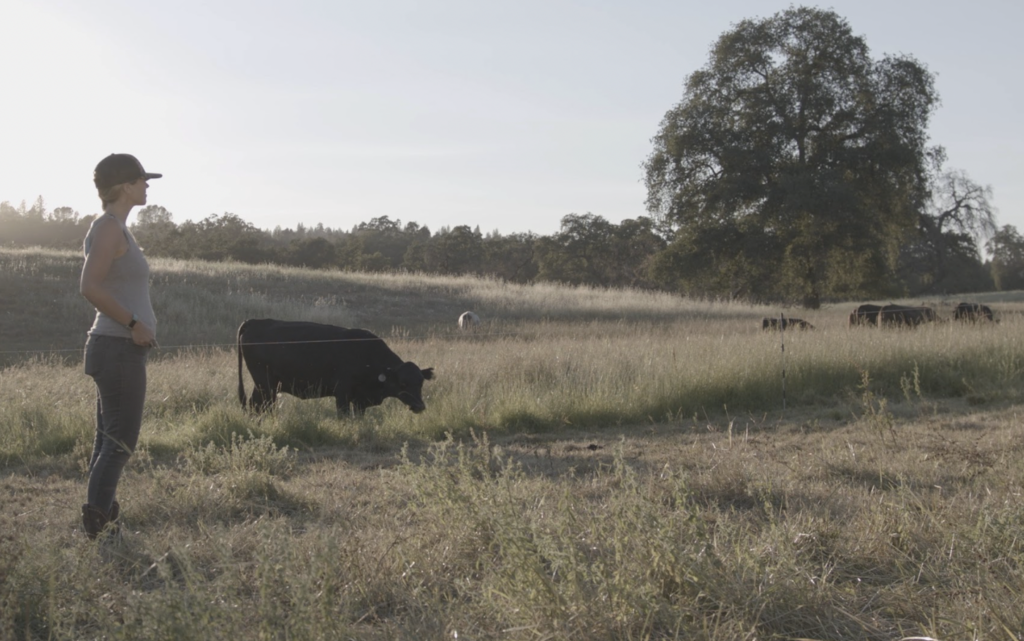
We sat down with California rancher Carrie Richards to discuss how restoring Mandatory Country of Origin Labeling (MCOOL) for beef is critical for independent ranchers like her. The policy requires meat labels to state where an animal was born, raised, and harvested—but since Congress repealed it for beef and pork in 2015, that information is no longer required.
In an industry where just four giant multinational meatpackers control 80-85% of the market, the repeal dealt a huge blow to U.S. ranchers and gave these companies even more power. The dominant meatpackers have since been able to import beef and hide its origin, pushing U.S. ranchers out of market opportunities while misleading consumers. Without clear labeling, domestic producers of high-quality beef struggle to compete on a level playing field.
“We sell primarily to Sprouts Farmers Market. And we’ll see a product in the case that we know came from another country, and it’s labeled as if it came from here, and it’s sitting right next to our product, two dollars cheaper,” said Richards.
While dominant meatpackers profit from the MCOOL repeal and lobby to keep it in place, the 2026 Farm Bill offers a critical chance to restore it. Ranchers like Richards say the move is long overdue.
Beef Industry Challenges
Richards runs a regenerative cattle ranch and grass-fed and grass-finished meat company, Richards Regenerative, alongside her siblings in Oregon House, California. The ranch has been in her family since 1941, but after taking it over from her dad in 2016, Richards started the lengthy process of transitioning it from a conventional cattle ranch to a regenerative one.
Today, Richards Regenerative beef is now served in schools across California, sold at grocery stores, and available for direct online sales. The journey to this point has not been easy, but it allows Richards to provide the highest-quality beef possible.
The challenges lie in navigating a system designed for multinational corporations, not independent ranchers. As a result, getting products to market is a logistical nightmare. For example, products must be processed in U.S. Department of Agriculture (USDA)-certified facilities that are often hours away. For Richards, that means her product travels six hours for processing and then four hours to her distributor.
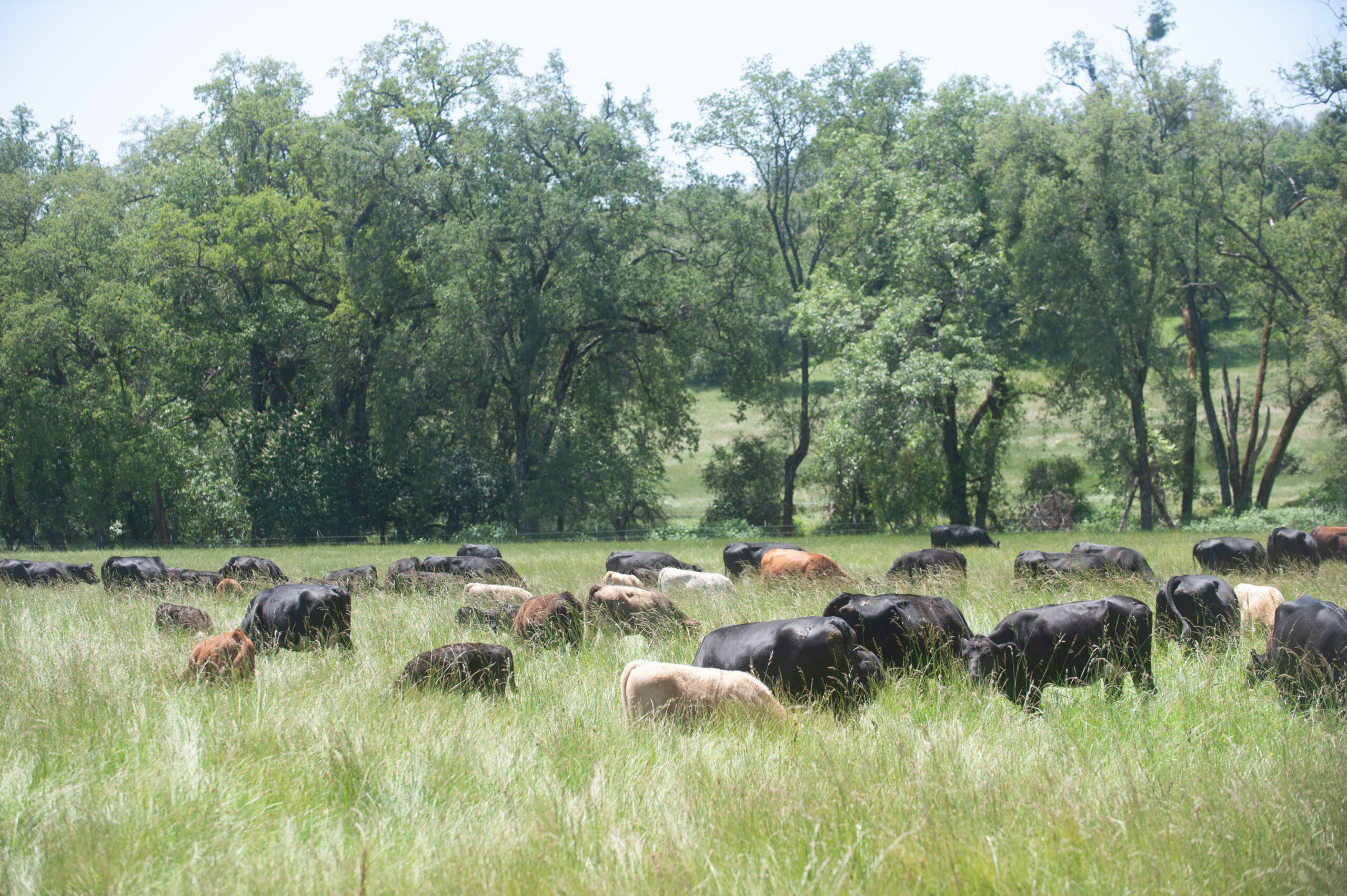
Richards’ regenerative cattle ranch
“Getting that product back from the processor is a little bit of a circus, and that animal travels pretty far before it makes it back to the ranch,” Richards said. “By the time it gets back here, we’ve added five dollars a pound to that product.”
Those costs show up at the grocery store as higher prices. But without clear labeling, consumers can’t tell what they’re paying for—or who they’re supporting.
Restoring MCOOL would change that, giving independent ranchers like Richards a fair shot to compete on the quality of what they produce.
How MCOOL Would Help
After navigating a system stacked against independent producers, Richards says restoring labeling transparency could make a real difference.
Farm Action and other advocates secured a rule change that took effect in January, ensuring that only animals born, raised, harvested, and processed in the United States can be labeled a “Product of USA,” closing a major loophole that allowed imported meat to be marketed as American. While this is a step in the right direction, the label remains voluntary. This means companies are not required to disclose where their meat comes from, and many consumers still assume USDA inspection labels mean beef was raised in the United States.
Restoring MCOOL would build on this progress by creating a clear, enforceable origin standard that consumers can trust and giving independent ranchers a fair shot at competing.
Bringing back MCOOL would:
- Level the playing field by stopping unlabeled imports
- Support domestic ranchers’ profitability and sustainability
- Help consumers make informed choices about the meat they buy
“We built our entire business on transparency,” Richards said. “That’s our tagline: trust and transparency, pasture to plate.”
But it’s difficult, Richards says, when corporations with large marketing budgets can make their labels look similar to the product she’s selling without having to disclose where it came from.
Restoring MCOOL would bring that transparency back to the marketplace, helping ensure independent ranchers don’t just survive, but can truly compete.
Why This Moment Matters
Debate is underway on the 2026 Farm Bill, which will determine the future of our food system and who it benefits—corporations or farmers.
Recent progress on the “Product of USA” label shows that change is possible when ranchers speak out, and policymakers listen. But without MCOOL, transparency remains incomplete.
Richards said restoring MCOOL is a critical first step toward a more transparent and competitive marketplace. Other measures, like government and school procurement contracts, can help build on that foundation.
As the 2026 Farm Bill debate heats up, you can make your voice heard right now in support of independent ranchers like Richards.
TELL CONGRESS: PROTECT OUR FOOD AND FARMERS
Coming up next in our Rethinking the Farm Bill series, we’ll tackle another of our seven priorities for farm bill reform: Break Up Farm and Food Monopolies—a look at how addressing consolidation, input costs, and market abuses could help strengthen competition, transparency, and innovation across the food and agriculture system.