By Emma Nicolas
In our Rethinking the Farm Bill blog series, we bring our 2026 Farm Bill policy priorities to life with stories from farmers and ranchers across the country who are navigating a food system increasingly controlled by a handful of powerful corporations.
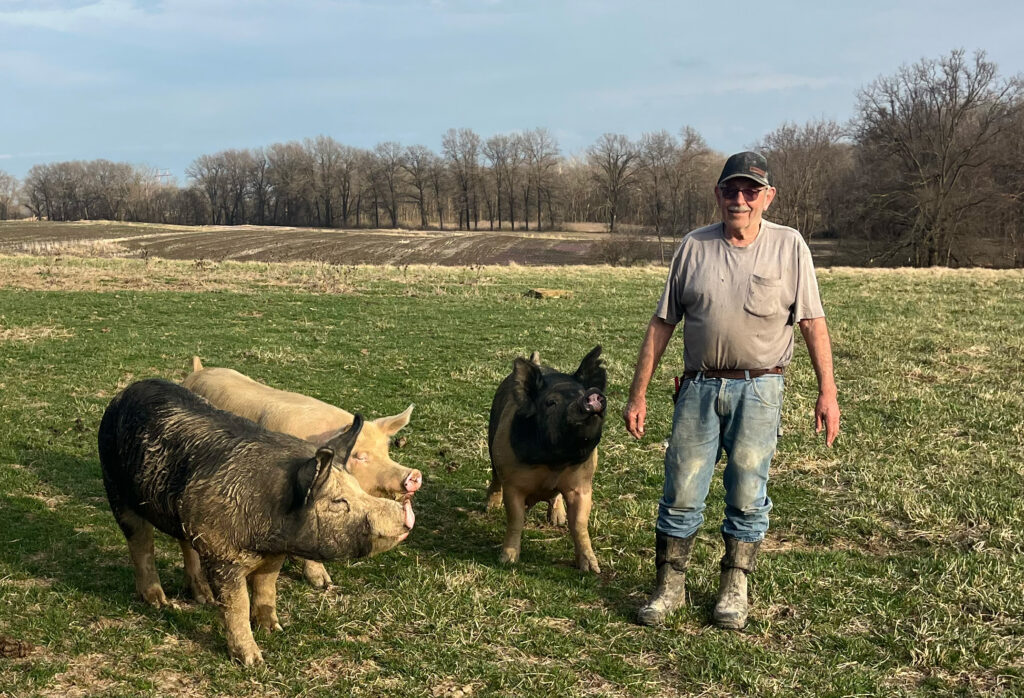
Bob Street has been farming in a small town in Lincoln County, Missouri, for the better part of six decades. In that time, he’s watched his once-vibrant rural community hollowed out by corporate agriculture.
We sat down with Street to talk about Proposition 12 (Prop 12), the California law that made it so his independent hog farm could stay in business.
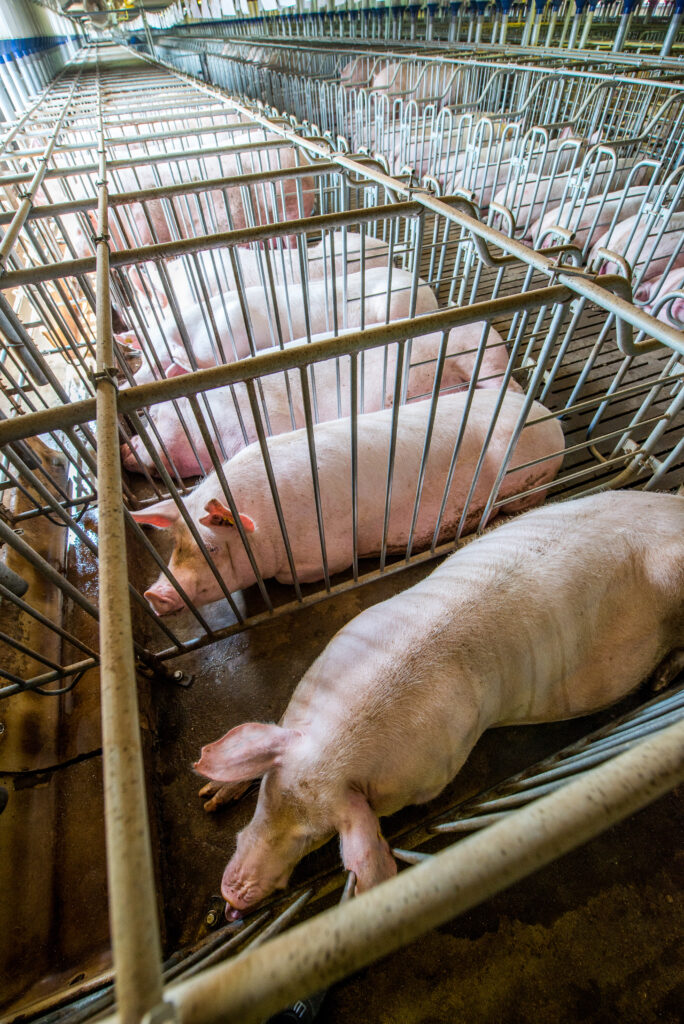
This voter-approved law sets basic space standards for breeding pigs and applies to any pork sold in the state. It has created a critical market and vital income stream for independent farmers, like Street, who raise crate-free pork.
The law went into effect in January 2024, and now at least 27% of hog farmers in the country are Prop 12 compliant.
Now, the largest pork corporations and their lobbyists in Washington, D.C. are trying to take Prop 12 away, and they’re using the 2026 Farm Bill to do it.
This is a threat not only to each state’s right to govern its food and farm system but also to the remaining independent hog farmers in the country who depend on this law to survive.
“If they eliminate us, it gives them a bigger market,” said Street of the corporations working to overturn Prop 12. “I think they would like to have it all and control it.”
Rural Communities Hollowed Out
America’s rural communities have been on the frontlines as powerful corporations have tightened their grip on our food and farm system.
Today, just four giant companies—Smithfield Foods (owned by WH Group), JBS, Tyson, and Hormel—control 70% of the U.S. pork industry. By buying up or pushing out their competitors, these companies quickly dominated the market—a shift that played a big role in the hog market crash in 1998, forcing many farmers to close up shop.
“I know how it used to be,” said Street. “I guess maybe that’s part of my problem. When I considered the hog business to be alive in this area, it was a whole different thing.”
Street remembers a time when there were over 100 local hog farmers. There was healthy competition among neighbors, with a positive ripple effect across the community. There were multiple equipment shops, livestock breeders, feed elevators, and veterinarians—but as hog farmers got pushed out, so did those businesses.
Today, most hog farmers work under contracts with the dominant pork companies—a system in which the corporation decides how the farm is run, while the farmer shoulders the financial risks.
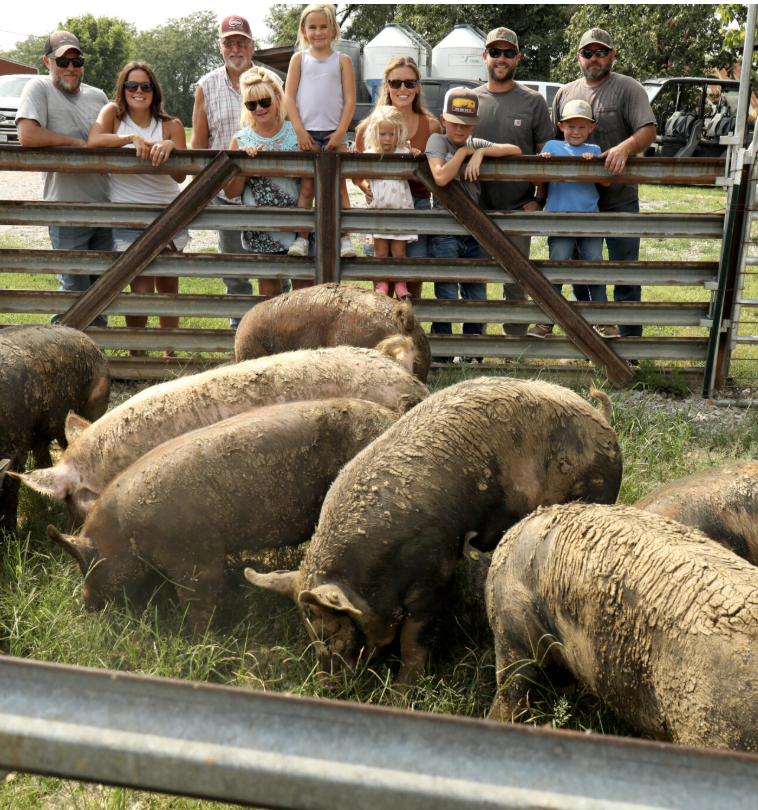
Meanwhile, independent farmers have had to find new ways to survive. Street and his neighboring hog farmers banded together to create a marketing co-op, which allows them to sell their product in larger quantities and negotiate better conditions, helping them stay afloat independently.
But it hasn’t been easy, Street said, and profitable market opportunities had all but dried up until Prop 12 came along.
Prop 12 Created a Lifeline
Even if independent hog farmers could find places to sell their product, there was little chance of making a profit. But Prop 12 changed that. It created a premium market for hog farmers raising pork without gestation crates.
For Street and many of his neighbors, Prop 12 rewarded practices they were already using to raise their hogs.
“It just fit in real well with our operation,” Street said. “We really didn’t have to change a whole lot.”
“A lot of consumers would appreciate, I think, the way we have to raise livestock,” Street said.
Corporate-controlled hog farms are more likely to find compliance difficult, Street said, which is why industry lobbyists have taken the fight to D.C., pushing to overturn Prop 12 through legislation in the 2026 House Farm Bill. For these giant companies, not being able to sell pork in California means lost revenue and market control.
If Prop 12 is overturned at the federal level, Street said he likely won’t be able to stay in the hog business, threatening the livelihood his family has spent generations building. Without independent farmers like Street, the industry will further consolidate into the hands of corporations, threatening rural America and the resiliency of our food supply chain.
“When everything is cookie-cutter, and one little thing goes wrong. It affects everybody,” Street said.
Why This Moment Matters
Debate is underway on the 2026 Farm Bill, which will determine the future of our food system and who it benefits—corporations or farmers.
The Save Our Bacon Act (H.R. 4673), included in the House Agriculture Committee’s farm bill, would block state and local governments from setting their own agricultural policies, effectively overturning Prop 12. It’s yet to be seen if the Senate will include similar legislation in its farm bill draft.
As Congress considers including this harmful legislation in the farm bill, Street shared a message: “I would like to have a level playing field. It seems like the corporates get represented very well. I’m sure a lot of money flows from them to some of the representatives to get things that they want.”
The Prop 12 fight is a glaring example of how corporate lobbyists influence farm policy to tighten control and push independent farmers out. Keeping this law alive is key to preserving states’ rights, ensuring a more resilient food supply chain, and supporting independent farmers like Street.
“I think it’s important that you keep the small producers,” Street said. “I’m not saying everybody has to be a small producer, but I think it’s important that you keep some of them. We greatly enhance our rural community. We keep it going.”
As the 2026 Farm Bill debate heats up, you can make your voice heard right now in support of independent farmers like Street.
TELL CONGRESS: PROTECT OUR FOOD AND FARMERS
Coming up next in our Rethinking the Farm Bill series, we’ll tackle another of our seven priorities for farm bill reform: Tell Us Where Our Beef Comes From—a look at how restoring Mandatory Country of Origin Labeling (MCOOL) for beef would allow U.S. ranchers to compete on a level playing field.