By Angela Huffman
The Trump administration promised to put farmers at the center of making America healthy. Its May 2025 Make America Healthy Again (MAHA) Report recognized problems farmers have faced for decades: powerful corporations controlling their markets, farm programs that shortchange growers of nutritious food, and concerns about chemical exposure.
We applauded that recognition. In June 2025, Farm Action gave the administration a detailed, farmer-led plan to address those problems.
Nearly two years after President Trump’s election, his administration’s record falls short of that promise. It has backed Bayer’s effort to block farmers’ cancer lawsuits, moved to repeal protections against meatpacker abuse, and expanded commodity subsidies without correcting the imbalance facing fruit and vegetable growers. It also canceled more than $1 billion intended to help schools and food banks buy from local farmers and cut support that helped small farms and food businesses reach local markets.
These decisions make it harder for farmers to earn a living growing healthier food.
We had demonstrated our willingness to engage early on. We welcomed Robert F. Kennedy Jr.’s promise to confront corporate control of the food system because he recognized the connection between agricultural policy and public health. Trump promised to let Kennedy “go wild” on health and food.
We weren’t supporting a political party. We were supporting a promise.
Our responsibility as a nonpartisan, farmer-led watchdog is to judge what the administration actually does. We have welcomed investments in regenerative farming, loan guarantees for independent meat processors, school kitchen improvements, and better farm insurance. But those steps cannot excuse broader decisions that weaken farmers’ rights and markets while protecting corporate interests.
These decisions span the White House and the departments and agencies responsible for agriculture, health, environmental protection, and justice. Ultimately, President Trump is responsible for his administration’s record.
Protecting Bayer at Farmers’ Expense
The MAHA Report raised concerns about chemical exposure and industry influence over science. Those concerns were reinforced when a journal retracted a widely cited glyphosate safety paper in late 2025, citing Monsanto’s undisclosed involvement and reliance on company studies.
Yet the Trump administration sided with Monsanto, owned by Bayer, in its Supreme Court fight to block lawsuits over Roundup’s missing cancer warning. We joined an amicus brief and spoke outside the Court defending farmers’ rights. The Court ultimately accepted the administration’s position, closing a path to compensation for farmers bringing those claims.
Trump also invoked the Defense Production Act to secure supplies of glyphosate, Roundup’s main ingredient. The EPA reapproved dicamba products, including Bayer’s, for growing soybeans and cotton despite the herbicide’s history of drifting onto neighboring farms and damaging crops.
We welcomed the USDA’s regenerative farming investment because it can improve soil health and reduce dependence on costly chemical inputs. Our plan called for research, practical advice, and financial help to make that transition affordable.
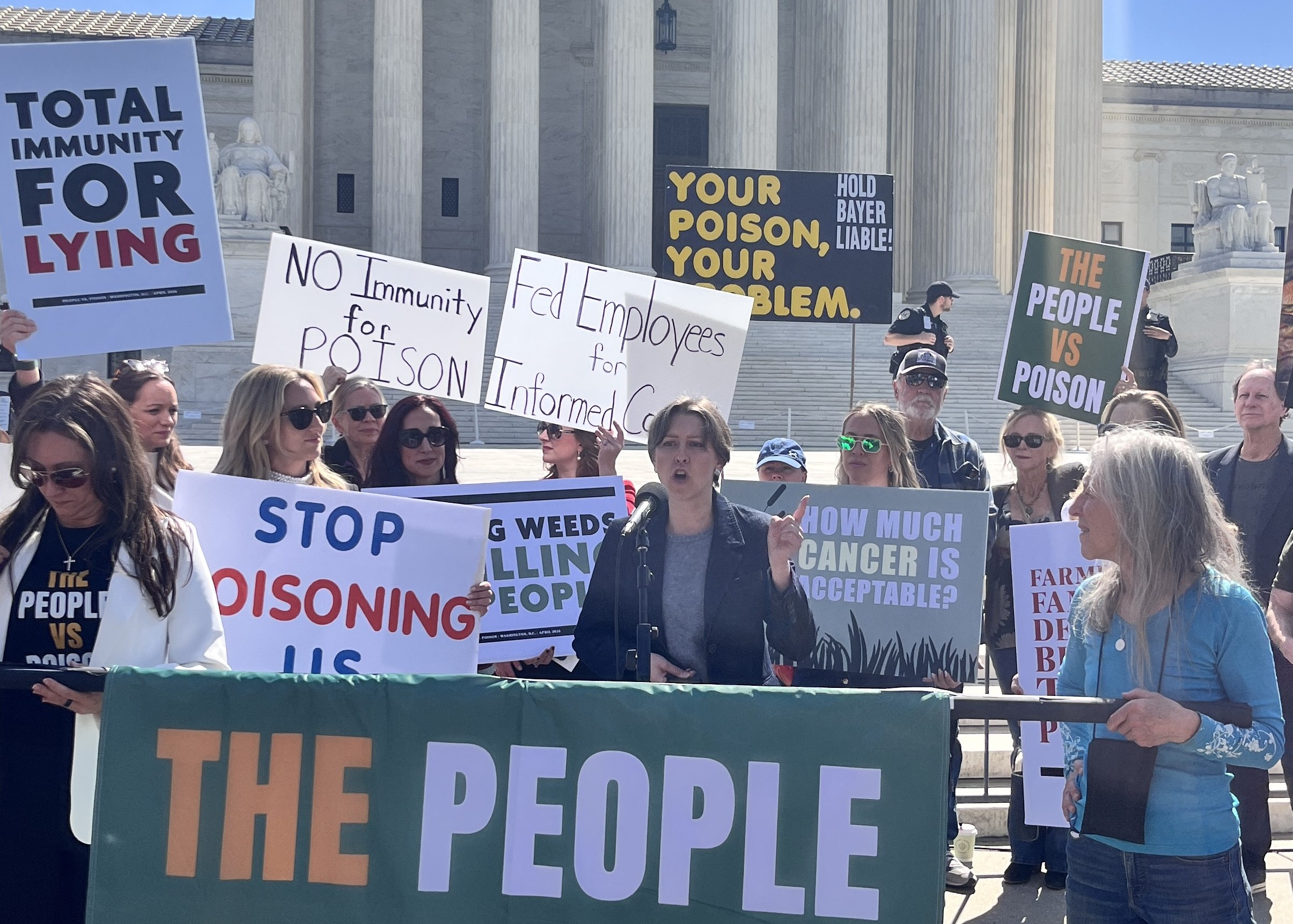
Farm Action’s Angela Huffman defends farmers’ right to sue pesticide manufacturers at a Supreme Court rally.
The White House has acted forcefully to protect glyphosate supplies. Farmers deserve the same urgency in developing alternatives and protecting their right to hold manufacturers accountable when harmed.
Weakening Protections Against Meatpacking Giants
The MAHA Report identified corporate concentration as a problem in the food system. Our plan called for breaking up meatpacking monopolies, strengthening farmers’ rights, and expanding independent processing.
We welcomed the meatpacking investigation in November 2025, but called for enforcement and results. That investigation and Trump’s subsequent enforcement order have yet to deliver the changes farmers need.
Instead, USDA has moved to repeal a rule under the Packers and Stockyards Act that bars companies from misleading farmers about contracts or punishing them for asserting their rights, joining a farmer group, or seeking another buyer. Removing those protections leaves farmers more vulnerable to the companies controlling their markets.
The new loan guarantees to expand independent processing are a positive step. But Trump also met with JBS co-owner Joesley Batista just before announcing expanded beef imports. Our first 30-day analysis found steep declines in prices paid to American ranchers, with little relief for consumers.
Farmers need more bargaining power and more buyers competing for their livestock. Rolling back their rights and pursuing an import policy that squeezes their prices work against both goals.
Taking Away Buyers for Local Food
Our plan called for using government food purchases to build dependable markets for local farmers and bring more fresh food into schools and other institutions.
Instead, USDA canceled more than $1 billion in planned local food purchasing funding, including roughly $660 million intended for schools and child care facilities. Those programs helped schools and food banks buy from nearby farmers.
USDA also terminated the Regional Food Business Centers program, which helped farmers and small food businesses develop markets and get their products to buyers. Some existing grants were preserved, but the broader support was cut.
Later Farm to School grants and school kitchen investments are worthwhile. But the amounts announced are far smaller than the purchasing funds USDA canceled, and kitchen funding does not replace money to buy food.
Farmers need buyers they can count on before they plant or invest. Cutting those markets makes it harder to grow the food the administration says Americans should eat.
Expanding Subsidies While Shortchanging Fruit and Vegetable Growers
The MAHA Report recognized that federal farm support favors commodity crops like corn and soybeans over fruits and vegetables. Our plan called for fixing that imbalance so farmers could afford to grow more nutritious food.
There have been steps forward. We welcomed the new Dietary Guidelines’ emphasis on whole, minimally processed foods.
The administration has also helped diversified farms get better insurance and provided $1.625 billion in specialty crop assistance, including relief for fruit and vegetable growers that we welcomed.
But its larger policy choices continue to favor commodity production. The relief package allocated $11 billion to commodity crop growers. Trump’s One Big Beautiful Bill also raised the annual payment limit for the main commodity subsidy programs from $125,000 to $155,000.
Larger payments for corn and soybeans do not help a farmer make a living growing carrots, apples, or broccoli.
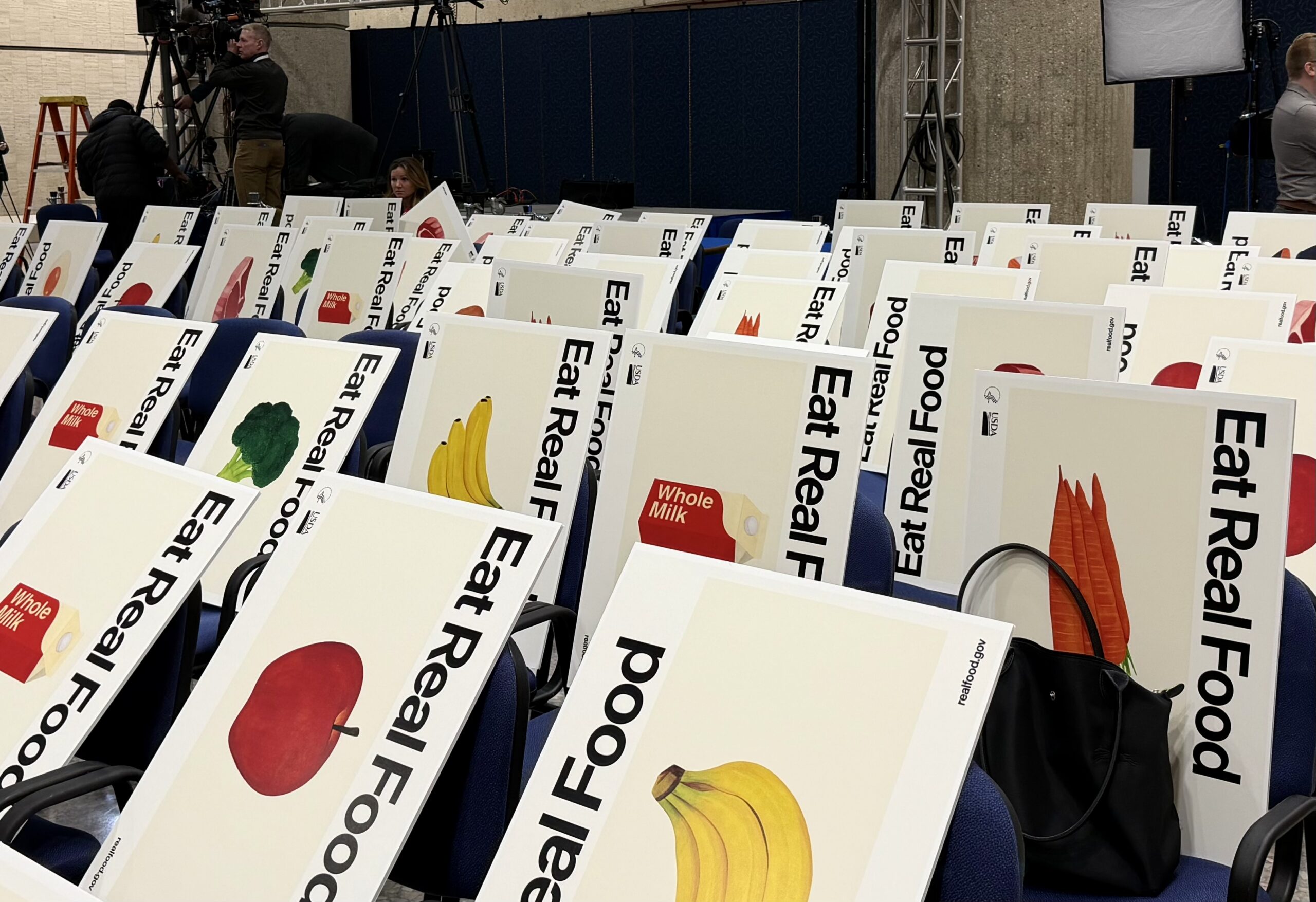
Farm Action attended the policy celebration for the new Dietary Guidelines at Health and Human Services.
Temporary relief and insurance improvements help, but they do not fix the longstanding imbalance. Telling Americans to eat more nutritious food must be matched by dependable support for the farmers growing it.
The Administration Needs to Change Course
We remain committed to addressing the problems the MAHA Report identified. We offered recommendations because we wanted this effort to succeed, and we will continue supporting policies that help farmers grow a healthier food supply.
President Trump should use the farmer-led plan we provided to change course. The measure of success is not what this administration promises, but whether its policies give farmers a fair chance to earn a living growing the healthy food Americans are urged to eat.