By Angela Huffman
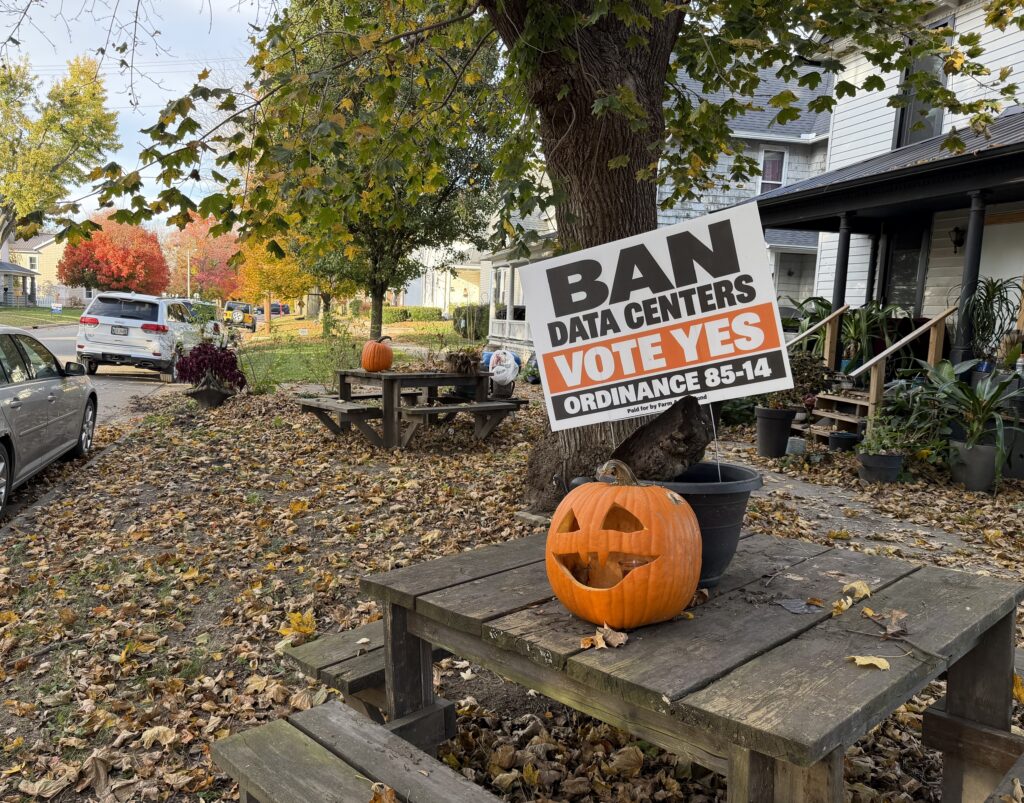
On November 3, voters in Upper Sandusky, Ohio, approved a charter amendment prohibiting the construction of large data centers within city limits.
The victory followed months of organizing, public meetings, legal work, and a petition drive that nearly failed just before the filing deadline.
Upper Sandusky is a town of about 6,600 people in northwest Ohio, surrounded by farmland. It’s about 10 miles from my family’s farm, where we’ve lived and worked for six generations.
Across Ohio, communities are confronting proposals for enormous data centers and the infrastructure required to power them. As Farm Action has documented, these developments raise serious questions about electricity, water, farmland, and public costs. Residents are also asking who gets to make decisions about development.
The concerns Farm Action had been raising nationally were now playing out in my own community. Working alongside my neighbors, I helped put the question of large data centers directly before voters.
A $900 Million Proposal
In June, Smartland Energy proposed developing a roughly $900 million data center and power-generation facility on approximately 146 acres near the northern edge of Upper Sandusky.
For a community our size, the scale was extraordinary.
Upper Sandusky was already facing questions about water, wastewater, traffic, and infrastructure associated with a major new Louis Dreyfus Company soybean processing plant. Now another enormous industrial project was being proposed, one that would place additional demands on local resources and included a 150-megawatt natural gas power plant.
Residents wanted to know how much development the community could absorb, who would bear the costs, and how much say they would have in decisions affecting their town.
Smartland initially sought approval under the city’s existing industrial zoning rules. We questioned whether those rules were appropriate for a development of this size.
I wrote a Substack post about the proposal and the questions it raised, including steps other communities had taken to challenge similar developments. In August, I also wrote an op-ed for Agri-Pulse explaining why rural communities should scrutinize the economic promises and public costs of large data centers.
We filled public meetings, challenged the proposed approval process, and pressed city officials for answers.
Amid growing public opposition, Smartland withdrew its zoning request but continued efforts to build community support for the project, including holding a public information event at a local church.
The withdrawal did not mean the project was over, and residents continued organizing.
Our First Victory: A Six-Month Moratorium
On July 6, Upper Sandusky City Council unanimously approved a six-month moratorium on data centers and associated power-generation facilities.
Residents packed council meetings and coordinated their calls for a moratorium, asking city officials to slow the process down so the community could understand the proposal and its potential consequences.
The moratorium was an important first step. It gave the city time to examine its options, but it wasn’t a permanent solution.
As residents, we wanted to understand what authority we had to make a lasting decision about large data centers within city limits. That question led us to the city’s charter amendment process.
Finding a Path to the Ballot
Ohio law allows residents to propose changes to how their city is governed through a process called a charter amendment.
Local residents worked with attorneys at Conserve Ohio, who drafted the charter amendment that ultimately became Ordinance 85-14.
The amendment would prohibit construction of data centers with an electrical demand or peak load exceeding 25 megawatts.
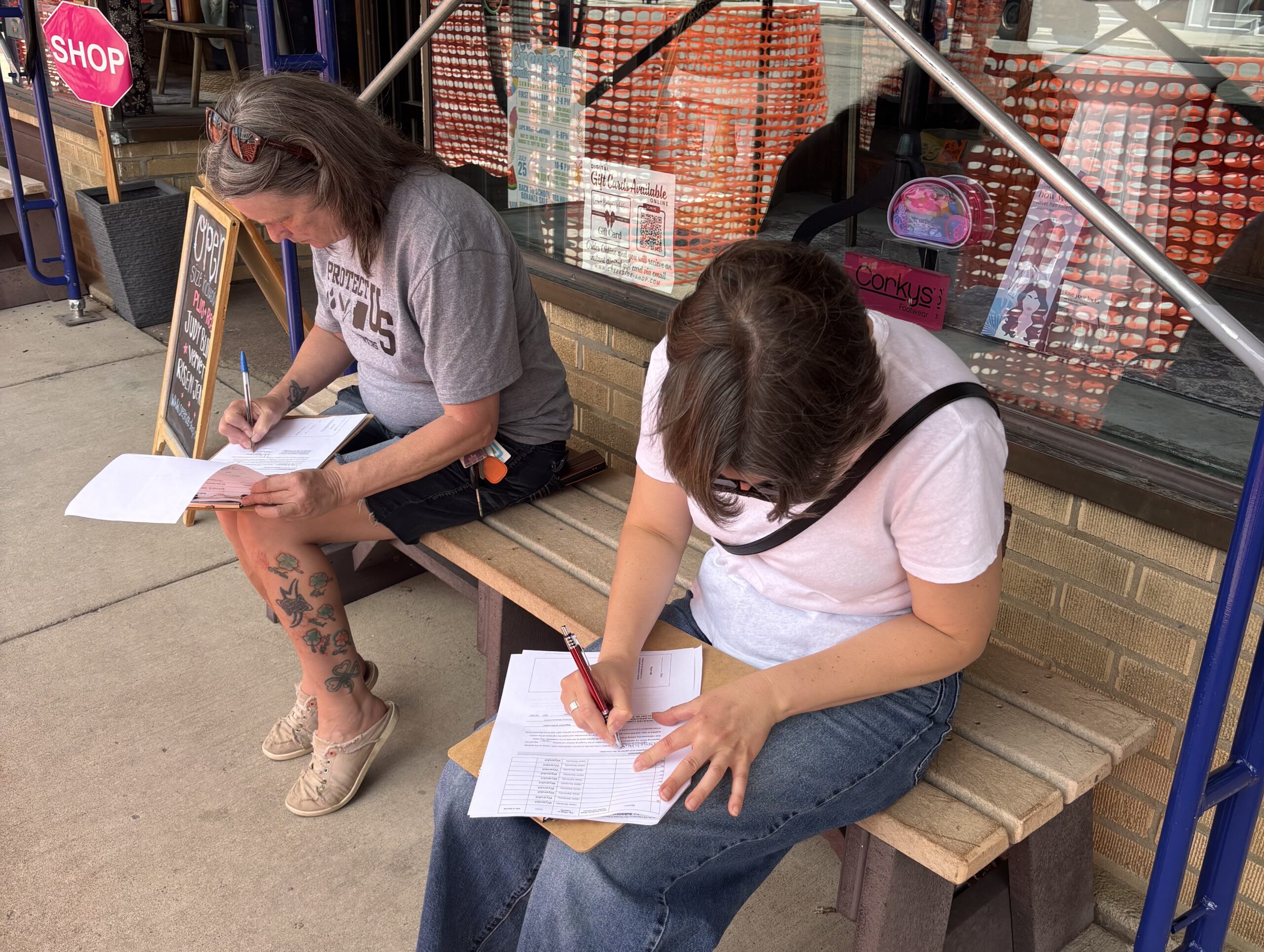
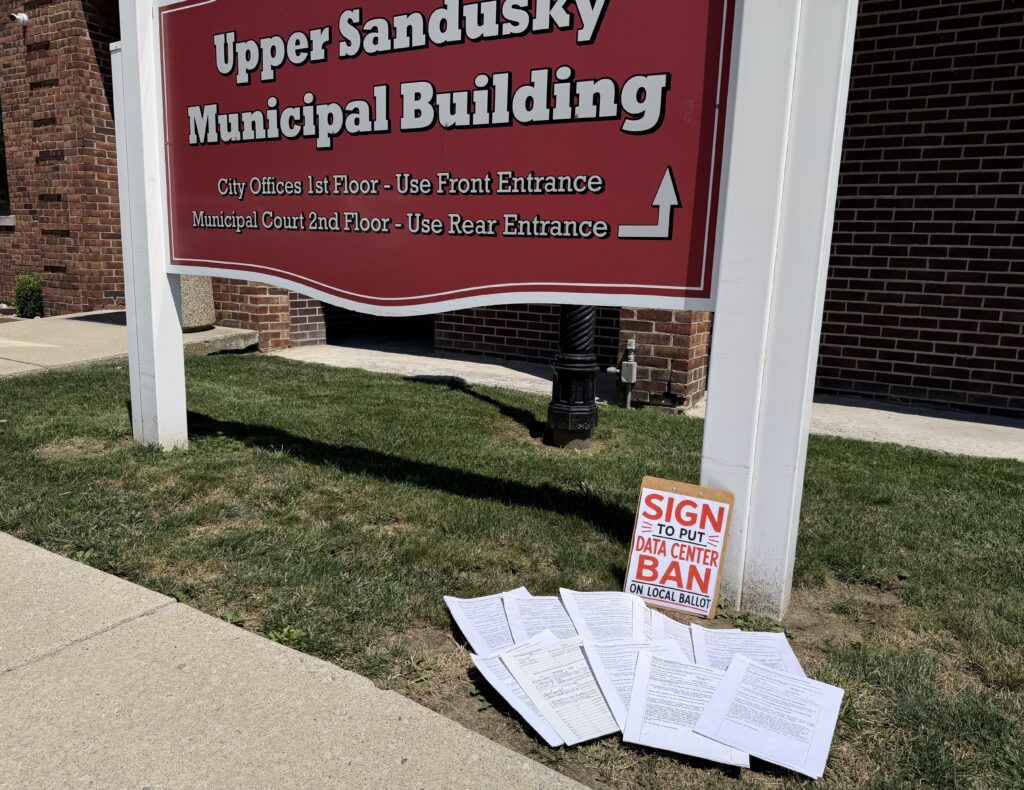
To place it on the November ballot, we needed to collect signatures from registered city voters.
We were initially told that 155 valid signatures would be sufficient. We collected well beyond that number, knowing some signatures would be rejected during verification.
On August 3, we submitted petitions containing 301 signatures. Of those, 192 were accepted.
We then learned that the city’s charter required 212 valid signatures. That left us 20 valid signatures short.
With just hours remaining before the filing deadline, we headed back out to collect signatures, determined not to let months of work fall short.
On August 5, we submitted another 50 signatures. Election officials accepted 37. Our final total was 229 valid signatures, just 17 more than required.
We had qualified for the November ballot.
Upper Sandusky Wasn't Alone
Upper Sandusky was one of 10 Ohio communities where Conserve Ohio supported ballot initiatives to prohibit large data centers.
Across the country, 44 data center-related measures appeared on November 3 ballots in 10 states. Ohio alone accounted for 20.
Together, these efforts reflected growing concerns about data center development and the desire for greater local control over decisions affecting communities.
Voters Have Their Say
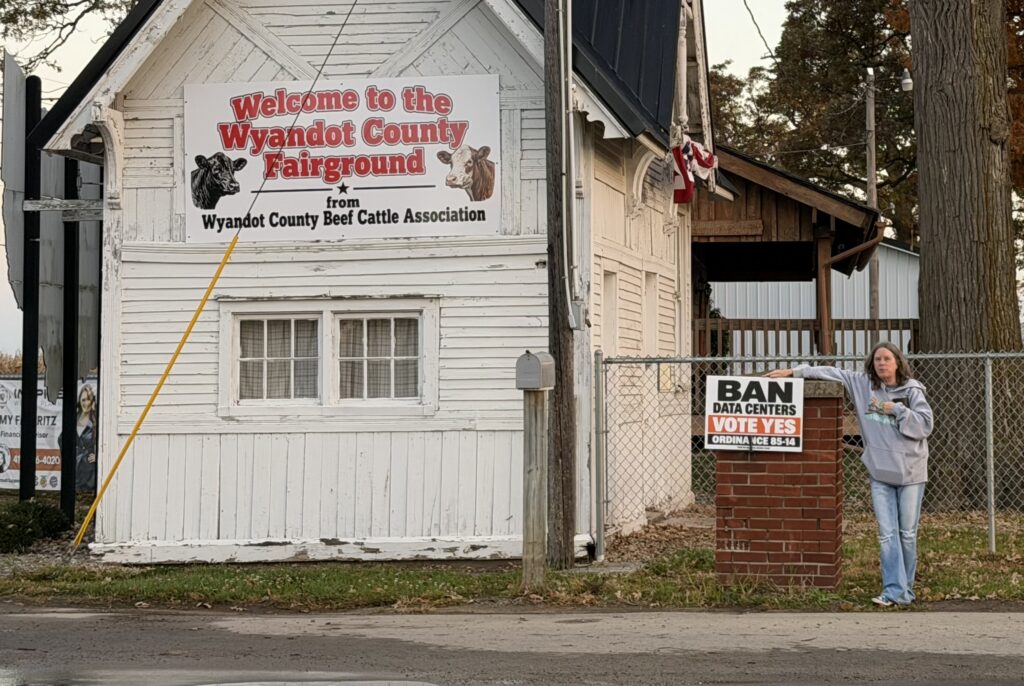
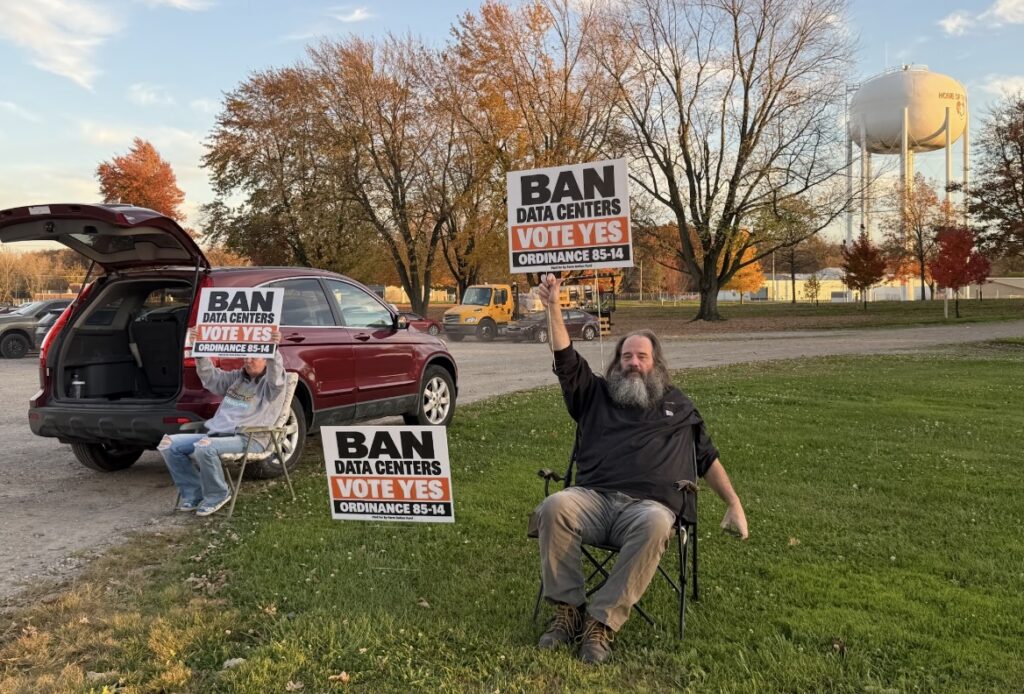
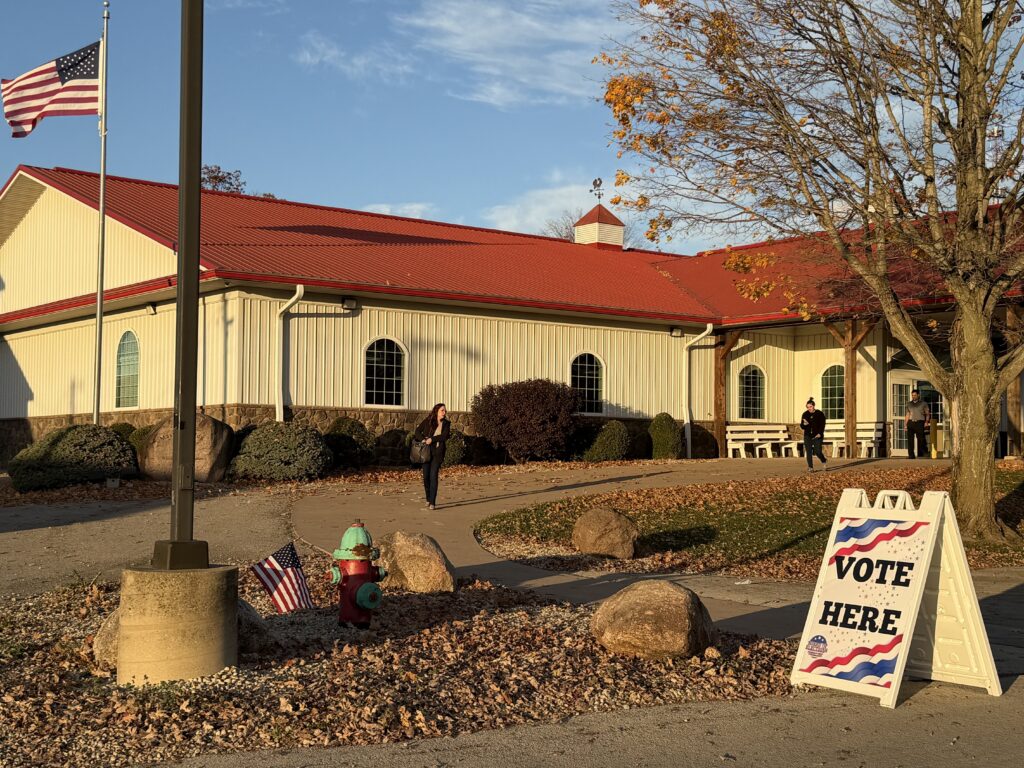
On Election Day, we were back outside, holding our signs as voters arrived at the polls. We got there at 6:30 a.m., when voting began, and stayed until the polls closed at 7:30 p.m.
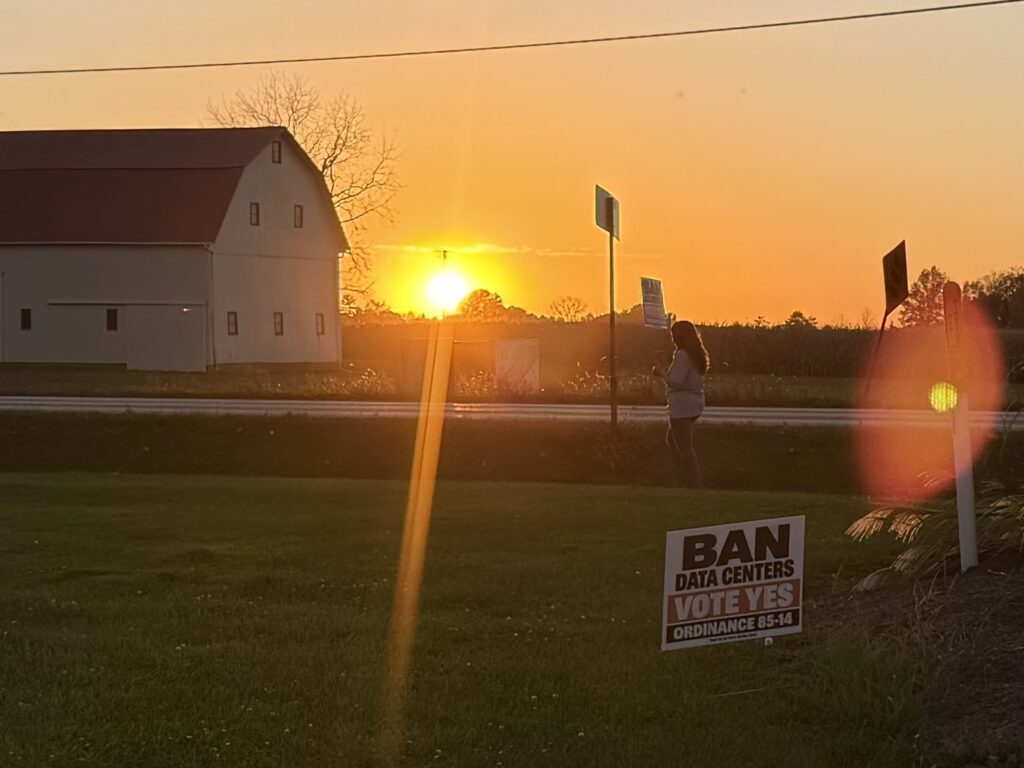
We watched the sun rise behind the polling place and set in front of it. Throughout the day, people honked their horns, gave us thumbs-up, and stopped to talk about why the issue mattered to them. Some thanked us for being out there.
On November 3, Upper Sandusky voters approved the charter amendment with 76.9% voting in favor.
Just a few months earlier, we were trying to figure out whether we could do anything about a nearly $1 billion data center and power plant. By Election Day, we’d secured a moratorium, collected enough signatures to put the question on the ballot, and won the vote. I’m proud of what our community accomplished together.
The Debate Continues Beyond City Limits
The charter amendment prohibits large data centers within Upper Sandusky’s city limits. But much of Wyandot County lies outside the city, including unincorporated areas without zoning protections.
Local residents are now pursuing protections for those areas, including asking county commissioners to consider a moratorium and zoning restrictions on large data centers.
A separate statewide effort is also collecting signatures for a proposed data center ban on Ohio’s November 2027 ballot.
I’ve spent my career working on the concentration of corporate power in American agriculture and its consequences for farmers and rural communities. This experience brought many of those same concerns close to home.
A nearly $1 billion data center and power plant is no small thing for a town of 6,600 people. But residents organized, learned the rules, and used the tools of local democracy to challenge a project that could have reshaped the community for generations.
The community’s work isn’t finished. But Upper Sandusky has shown that a small rural town can stand up to powerful interests and determine its own future.